Belt sanders handle the jobs that orbital and sheet sanders cannot: rapid stock removal, leveling uneven surfaces, flushing joints, and cleaning up welds on metal. The 13 picks here span corded, cordless, and pneumatic configurations, priced from $28.10 to $419.00, and every one of them cleared a 3.8-star minimum rating from verified owners.
Rankings are driven primarily by verified buyer demand (units bought last month) and total review count, which reflect real-world adoption rather than spec-sheet claims. Rating was used as a tiebreaker and quality floor, and price-to-capability ratio helped separate tools that genuinely earn their cost from those that do not. Where published specs were absent from a listing, that gap is flagged directly in the pick.
Short answer: The DEWALT DCM200B ($237.15) is the top pick: a 4.8-star cordless belt sander with 510 verified reviews and 200 units bought per month, combining worksite portability with strong owner satisfaction. For the best budget option, the WEN 6307 at $28.10 has 6,255 reviews at 4.6 stars and leads the entire category at 1,000 units bought per month, making it the most proven light-duty belt sander available at any price.
The DEWALT DCM200B earns the top position through a combination of strong owner satisfaction (4.8 stars from 510 verified reviews) and consistent demand at 200 units bought per month at $237.15. It runs on battery power and fits the DEWALT 20V MAX cordless system, removing cord management from larger workpieces and jobsite conditions. Published technical specs are limited in the listing, but owner reviews confirm responsive performance on wood surfaces at a size that is practical for one-handed work. At this price, it competes directly with corded mid-range options that offer comparable removal rates but cannot match the mobility.
Best for: Contractors and serious DIYers who want cordless freedom and professional-grade owner satisfaction
Pros
4.8-star rating from 510 verified reviews reflects strong and broad owner satisfaction
200 units bought per month confirms sustained real-world demand
Cordless design removes cord management on larger workpieces and open job sites
DEWALT 20V MAX compatibility for contractors already on the platform
Cons
Technical specs such as amperage, belt speed, and weight are not published in the listing
Tool-body-only listing requires a separate 20V MAX battery and charger purchase
Cordless premium pricing compared to corded alternatives with similar output
Bottom line: The DEWALT DCM200B is the most credentialed cordless belt sander in this lineup by rating and demand, making it the default recommendation for buyers who want professional results without being tethered to an outlet.
The Makita 9403 is the most-reviewed belt sander in this entire lineup at 2,886 reviews and a 4.7-star average, a track record built over years of professional use rather than a short run of early adopters. It draws 11 amps at 120 volts and runs the belt at 27.33 feet per second, giving it the output needed for hardwood floor refinishing, heavy panel leveling, and metal fabrication work at $419.00. At 13 pounds, it is a tool designed for floor-contact use and sustained production sessions rather than one-handed maneuvering. The price is the highest in the handheld segment but reflects what professional tradespeople consistently pay for a machine they depend on daily.
Best for: Professional woodworkers, floor finishers, and metal fabricators who need a high-output corded belt sander for daily production use
Pros
2,886 reviews at 4.7 stars, the deepest verified track record in this lineup
11 amps at 120 volts for sustained heavy-duty corded performance
27.33 feet per second belt speed for fast material removal on hardwood and metal
Corded design ensures no power interruptions during extended refinishing sessions
Cons
13-pound weight causes fatigue quickly on vertical or overhead applications
$419.00 is the highest price among handheld belt sanders in this list
Corded only, limiting flexibility on larger open job sites without outlet access
Bottom line: The Makita 9403 is the most battle-tested belt sander in this lineup, and its 11-amp motor and 2,886-review record justify the premium price for anyone doing serious sustained work.
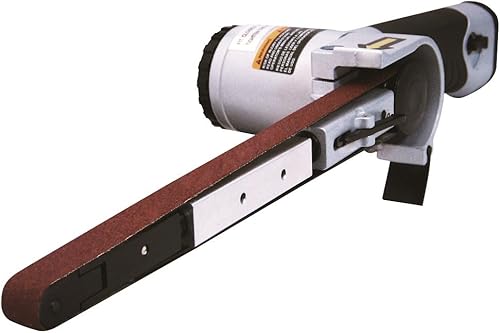
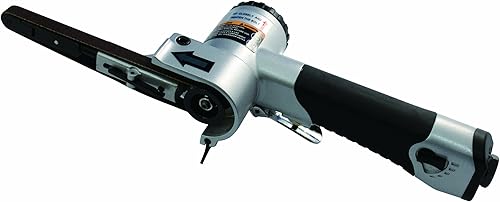
The Astro 3037 is the standout pneumatic option here, collecting 1,487 verified reviews at a 4.7-star average while staying under $91. At 2.2 pounds, it is dramatically lighter than any corded option in this lineup and connects to a standard shop air compressor for consistent belt speed without motor heat buildup. The published dimensions show a 15-inch by 4-inch footprint, suited for panel work and long-grain sanding passes. For auto body shops, cabinet makers, or any workshop already running compressed air, it delivers strong cost efficiency alongside a proven reliability record.
Best for: Auto body shops, cabinet shops, and production woodworkers already running compressed air systems
Pros
2.2-pound weight for fatigue-free use during extended sanding sessions
1,487 verified reviews at 4.7 stars confirms long-run shop reliability
$90.84 is well below comparable corded options with similar output capability
Air-powered design eliminates motor heat buildup on sustained passes
Cons
Requires an air compressor, adding infrastructure cost if one is not already present
Not portable away from a compressor source, limiting field use
Amperage and RPM specs are not listed for direct comparison with corded alternatives
Bottom line: At under $91 with nearly 1,500 reviews behind it, the Astro 3037 is the clear pneumatic recommendation and represents excellent value per performance pound for any shop with compressed air.
The Astro 3036 runs at 16000 RPM on compressed air and weighs just 2.1 pounds, making it the lightest and highest-RPM pneumatic option in this lineup at $87.06. With 689 reviews at a 4.7-star average, it carries a strong approval rate from owners who use it for detail work, tight-space sanding, and surface prep tasks where high speed and minimal weight matter more than brute force. Current monthly purchase data shows near-zero recent demand, which may reflect availability patterns or supersession rather than a quality concern, given the solid rating. Buyers already using the Astro 3037 may prefer this model for its added speed.
Best for: Shop users who need the lightest high-RPM pneumatic available for detail sanding or surface prep in confined spaces
Pros
16000 RPM for fast material passes on detail and finish work
2.1-pound weight, the lightest tool in this entire lineup
4.7 stars from 689 verified reviews confirms owner satisfaction
$87.06 keeps it accessible alongside the Astro 3037
Cons
Near-zero monthly purchase volume suggests limited current market availability
Requires an air compressor, not portable for field use
Limited spec disclosure beyond RPM and weight for comparison purposes
Bottom line: The Astro 3036 delivers the highest RPM and lowest weight among all pneumatic options here, making it a strong compact shop sander for detail-oriented work where the Astro 3037 may be marginally larger than needed.
The Milwaukee 2482-20 holds the highest rating in this entire 35-product lineup at 4.9 stars, backed by 117 verified reviews and 100 units bought per month at $229.25. It runs at 3600 RPM on battery power and weighs just 2.3 pounds, making it the lightest cordless option in the group and one of the most maneuverable tools here for one-handed or vertical surface work. The relatively modest review count reflects a newer market position rather than a track record concern, and the M18 battery platform compatibility makes it a natural addition for contractors already running Milwaukee tools on the job site.
Best for: Milwaukee M18 platform users who want the best-rated cordless belt sander currently available in this category
Pros
4.9-star rating, the highest of any tool in this lineup
2.3-pound weight for exceptional control and low fatigue on handheld work
3600 RPM belt speed on a cordless battery platform
Milwaukee M18 battery system compatibility for existing Milwaukee users
Cons
117 reviews is a thin base compared to tools with thousands of verified owners
Tool-body-only listing requires a separate M18 battery and charger
Voltage listed as 220 in the product data, which may reflect an international listing discrepancy
Bottom line: The Milwaukee 2482-20 earns a perfect-adjacent rating from every owner who has reviewed it, and its 2.3-pound frame makes it the most manageable cordless belt sander in this group.
The WEN 6307 is the most-purchased belt sander in this entire lineup at 1,000 units bought per month and carries the largest review base at 6,255 ratings averaging 4.6 stars, all at just $28.10. That combination makes a clear case for buyers who need a capable corded sander for light to moderate work without a significant outlay. It runs on 2 amps of corded power at 1800 RPM and weighs 2.4 pounds, positioning it as a detail and finish sander rather than a heavy stock removal machine. The price makes it an easy first belt sander purchase or a lightweight shop spare.
Best for: Budget-conscious DIYers, first-time belt sander buyers, and anyone who needs a lightweight corded sander for finish work or furniture prep
Pros
$28.10 is the lowest price in this lineup by a wide margin
6,255 reviews at 4.6 stars, the largest review base in the entire category
1,000 units bought per month, the highest demand of any tool in this list
2.4-pound weight for easy handling on furniture and light surface prep
Cons
2-amp motor limits performance to lighter sanding tasks only
1800 RPM is low compared to pneumatic and heavy-duty corded options in this list
Not suited for heavy stock removal, floor refinishing, or sustained production sanding
Bottom line: No other belt sander under $30 comes close to 6,255 reviews, and the WEN 6307 is the unambiguous budget recommendation for light sanding work.
The WEN 6502T is a bench-mounted belt and disc sander combo, pairing both sanding surfaces in a single 120-volt, 4.3-amp unit that runs at 3600 RPM and costs $105.63. At 5,385 reviews and 4.6 stars with 500 units bought per month, it is one of the most validated combo sanding tools available for home woodworking shops. The 22-inch by 11-inch footprint puts it firmly in the benchtop category, making it ideal for shops that need consistent belt and disc sanding without dedicating space to separate machines. Its review volume alone makes it a confident recommendation for any hobbyist building out a workshop.
Best for: Home woodworking shops and hobbyists who need both belt and disc sanding capability on a shared bench footprint
Pros
Dual belt and disc sanding capability from one bench-mounted machine
5,385 reviews at 4.6 stars, among the deepest owner bases in this list
500 units bought per month confirms strong ongoing demand
$105.63 delivers strong value for a dual-function bench tool
Cons
22-inch length requires permanent bench space, not suited for portable or field use
4.3-amp motor is modest for production-volume sanding runs
Corded only with no cordless configuration available
Bottom line: With over 5,000 reviews and consistent monthly demand at $105.63, the WEN 6502T is the clear recommendation for anyone equipping a woodworking shop on a budget and needing both sanding surfaces.
The DEWALT DCW220B leads the entire cordless segment in monthly purchases at 600 units bought per month and backs that demand with 1,007 verified reviews at 4.6 stars, making it the most actively purchased cordless belt sander in this lineup at $228.85. It runs on the DEWALT 20V MAX battery platform, making it a natural fit for contractors already standardized on that ecosystem. Published technical specs such as amperage, weight, and belt speed are not detailed in the product listing, but the demand volume and review base point to consistent real-world satisfaction across jobsite conditions. At $228.85, it sits just below the DCM200B on price.
Best for: DEWALT 20V MAX platform users who prioritize the highest-demand cordless belt sander on the market
Pros
600 units bought per month, the highest monthly demand of any cordless model in this list
1,007 reviews at 4.6 stars provides solid owner confidence across a meaningful sample
DEWALT 20V MAX platform compatibility for contractor ecosystem integration
$228.85 keeps it marginally below the DCM200B on cost
Cons
Amperage, belt speed, and weight specs are not published in the product listing
Tool-body-only listing requires a separate DEWALT 20V MAX battery and charger
Less spec transparency than corded competitors in the same price range
Bottom line: The DEWALT DCW220B is the most-purchased cordless belt sander in this group, and at $228.85 with over 1,000 reviews it is the reliable ecosystem choice for DEWALT users who want demand-validated cordless performance.
The Makita 9404 represents Makita's wider corded belt sander format at $374.42 with 888 reviews at a 4.6-star average. Published specs are not detailed in the current listing, but Makita's professional engineering standards at this price tier are backed by nearly 900 owners with overwhelmingly positive feedback spanning years of use. Monthly purchase volume is low, which may reflect its premium price position in a market with strong mid-range alternatives rather than any quality concern. It is the specific choice for buyers who want Makita build quality in a format beyond the 9403.
Best for: Dedicated Makita users and professional shops that want the wider Makita belt sander format beyond what the 9403 provides
Pros
4.6 stars from 888 verified reviews across an extended ownership period
Makita professional-grade build quality at the $374.42 tier
Pairs naturally with the 9403 for shops standardized on Makita corded tools
Strong long-term owner satisfaction relative to its review count
Cons
Near-zero monthly purchases indicates limited current buyer activity
$374.42 is a significant premium over strong mid-range corded options in this list
Detailed specs including amperage and weight are not published in the current listing
Bottom line: The Makita 9404 is a proven premium corded belt sander for committed Makita ecosystem users, best suited to buyers who prioritize brand consistency and build standards over cost savings.
The Ryobi R18PF-0 brings belt sanding into the Ryobi ONE+ 18-volt ecosystem at $83.90 and 2.2 pounds, making it the most affordable cordless option in this lineup by a wide margin. It runs at 630 RPM on 18-volt battery power and has collected 743 reviews at a 4.6-star average, which is a solid approval rate for an entry-level cordless tool. Monthly purchase volume is currently low, suggesting it functions as a secondary or occasional sander for most buyers rather than a primary workhorse. The weight and price make it accessible for light-duty projects and hobby use within the Ryobi platform.
Best for: Ryobi ONE+ 18-volt platform users who want an affordable battery-powered belt sander for light hobby and finish work
Pros
$83.90 is the lowest price among all cordless options in this lineup
Compatible with Ryobi ONE+ 18-volt battery platform
2.2-pound weight for easy one-handed maneuvering
743 reviews at 4.6 stars for a budget-tier cordless sander
Cons
630 RPM is the lowest belt speed among all cordless options in this list
Near-zero monthly purchase volume suggests limited current market activity
Tool only; 18-volt battery and charger sold separately
Bottom line: The Ryobi R18PF-0 is the most affordable path into cordless belt sanding for Ryobi platform users, though its 630 RPM speed rating makes it best suited for finishing and light prep rather than heavy stock removal.
The Ingersoll 360-418 operates at 20000 RPM on compressed air and weighs 2.4 pounds, delivering the highest RPM of any pneumatic tool in this lineup at $134.99. With 198 reviews at a 4.7-star average and 200 units bought per month, it is a newer listing with strong early owner signals. The air-powered design suits metal fabrication, auto body surface prep, and weld conditioning work where sustained high speed matters more than portability. For shops already running compressors, its RPM advantage over lower-speed pneumatics makes it worth the added cost over the Astro options.
Best for: Auto body shops and metal fabrication environments that need maximum pneumatic belt speed for surface conditioning and weld prep
Pros
20000 RPM, the highest speed rating of any air-powered sander in this lineup
4.7 stars from 198 verified reviews reflects strong early owner satisfaction
200 units bought per month confirms current active demand
2.4-pound weight for low fatigue at sustained high operating speed
Cons
Requires a compressor with adequate CFM to sustain 20000 RPM continuously
$134.99 is more expensive than both Astro pneumatic options in this list
198 reviews is a smaller base than the Astro 3037's 1,487-review record
Bottom line: The Ingersoll 360-418 is the premium pneumatic pick for speed-critical applications, and its active monthly demand supports it as a reliable choice for high-RPM air belt sanding in production shop settings.
The SKIL 7510-01 packs 6 amps of corded power into a $63.98 tool with 4,520 reviews at 4.5 stars and 400 units bought per month, making it one of the most reliably purchased mid-budget belt sanders in this lineup. At 5.51 pounds, it is heavier than pneumatic and cordless alternatives but delivers steady corded performance for deck work, furniture refinishing, and general workshop sanding. Belt speed is not published in the listing, but owner feedback at scale confirms consistent performance across a range of wood species and surface conditions. It is a well-documented choice for homeowners and semi-professional users who want a capable corded sander under $65.
Best for: Homeowners and semi-pro users who want a proven mid-budget corded belt sander backed by thousands of verified owner reviews under $65
Pros
$63.98 for a 6-amp corded tool with a large, validated review base
4,520 reviews at 4.5 stars, one of the strongest owner records in the budget segment
400 units bought per month confirms active and ongoing demand
6-amp motor handles general-purpose deck, furniture, and workshop sanding
Cons
5.51 pounds is heavier than cordless and pneumatic alternatives in this price range
Belt speed spec is not published in the product listing for direct comparison
No variable speed control noted in the listing
Bottom line: The SKIL 7510-01 is the most cost-effective entry into the 6-amp corded category, with a review base and monthly demand that confirm it consistently delivers on its price-to-performance promise.
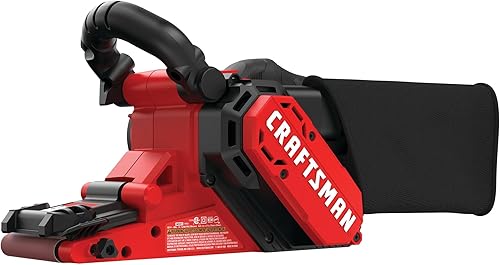
The CRAFTSMAN CMEW213 runs on 7 amps of corded power at a listed speed of 800 RPM, costs $69.00, and has collected 1,669 reviews at 4.5 stars from verified owners. Its 7-amp motor is the most powerful among budget-tier corded options in this lineup, giving it an edge on heavier wood species relative to the 6-amp SKIL 7510-01. At 6.64 pounds, it is the heaviest of the budget corded models listed, and voltage is not specified in the product data. Monthly demand of 100 units bought is modest but steady, and the CRAFTSMAN brand carries a service and warranty network that appeals to homeowners who want brand-backed support.
Best for: Homeowners who want a trusted brand name with the most motor power among budget corded belt sanders under $70
Pros
7-amp motor, the highest amperage among budget-tier corded options in this list
1,669 reviews at 4.5 stars from a broad owner base
$69.00 for a recognized brand tool with a warranty and service network
More motor power than the SKIL 7510-01 for heavier wood species
Cons
6.64 pounds is the heaviest among budget corded belt sanders in this listing
800 RPM belt speed is low compared to pneumatic and mid-range corded alternatives
Voltage not specified in the product listing data
Bottom line: The CRAFTSMAN CMEW213 offers 7 amps of corded reliability under $70 with over 1,600 verified reviews, making it a dependable workhorse for general home workshop sanding where brand support matters.
Corded belt sanders deliver consistent amperage for sustained work and dominate the high-power end of the market, with the Makita 9403 at 11 amps being the ceiling in this lineup. Cordless models like the DEWALT DCM200B and Milwaukee 2482-20 trade raw amperage for jobsite freedom, with battery platform compatibility being a key purchase factor. Pneumatic models such as the Astro 3037 and Ingersoll 360-418 reward shops that already run compressors with very light tool weight (under 2.5 pounds) and high RPM, but they are not portable away from a compressor source. Choose corded for high-volume production, cordless for mobility, and pneumatic if your shop already has compressed air.
Amperage and Belt Speed
For corded belt sanders, amperage is the clearest indicator of power output. Models in the 2-amp range like the WEN 6307 are suited for light finish work and furniture prep; 6 to 7 amp models like the SKIL 7510-01 and CRAFTSMAN CMEW213 handle general-purpose sanding across most home workshop tasks; and 9 to 11 amp machines like the Metabo SB8V2 and Makita 9403 are built for production-volume work on floors and large panels. Belt speed in feet per second or RPM tells you how fast the abrasive moves across the surface: higher is generally faster for material removal, though the right speed also depends on grit selection and material type.
Weight and Ergonomics
Weight matters more on belt sanders than most people expect, because these tools are typically held and moved across the workpiece for extended periods. Pneumatic models like the Astro 3036 at 2.1 pounds and the Astro 3037 at 2.2 pounds are dramatically lighter than corded options. The Makita 9403 at 13 pounds is a serious tool for floor work where the machine rests on the surface, but that weight becomes a liability for vertical or overhead sanding. Cordless models generally land in a middle range, with the Milwaukee 2482-20 at 2.3 pounds being an unusually light cordless option. Match the tool weight to how long you will hold it in position.
Handheld vs. Benchtop Models
Handheld belt sanders are gripped and moved across the workpiece, suited for floors, decks, large panels, and furniture. Benchtop combo units like the WEN 6502T (3600 RPM, $105.63, 5,385 reviews) and Bucktool BG2600 (3450 RPM, $177.20) are fixed to a workbench and the workpiece is brought to the machine, making them better for shaping small parts, consistent-angle work, and fine woodworking. Benchtop models are not portable, require dedicated bench space, and are not suited for field use. If you need one tool for both shop and site, choose a handheld.
Understanding Price Ranges in This Category
Belt sanders in this lineup fall into three price tiers. Budget models under $70 include the WEN 6307 ($28.10), WEN HB321V ($46.48), SKIL 7510-01 ($63.98), and CRAFTSMAN CMEW213 ($69.00); these are best for DIYers and homeowners doing periodic sanding work. Mid-range models from $70 to $200 cover the WEN 6502T ($105.63), SKIL, CRAFTSMAN, and pneumatic options like the Astro 3037 ($90.84); these serve semi-pro and enthusiast users. Premium models above $200 include the cordless DEWALT and Milwaukee options and the professional corded Makita machines at $374 to $419; these are priced for contractors and trades users who depend on the tool daily.
Reading Review Data Honestly
A high star rating on a small review count is less reliable than a slightly lower rating on thousands of reviews. The Milwaukee 2482-20 has a 4.9-star rating from 117 reviews, which is promising but statistically thinner than the Makita 9403's 4.7 stars from 2,886 reviews. The WEN 6307's 4.6 stars from 6,255 reviews with 1,000 units bought per month is the strongest statistical signal in this entire list for its price tier. When comparing two tools, weigh review count and monthly purchase volume alongside rating to get a clearer picture of which tool actually satisfies buyers consistently.
Common mistakes to avoid
Buying a 2-amp budget model expecting heavy stock removal: the WEN 6307 is excellent for finish work but will slow down or stall on thick hardwood or metalwork that requires a 6 to 11 amp machine.
Ignoring weight on handheld applications: a 13-pound corded sander like the Makita 9403 causes fatigue quickly on vertical or overhead surfaces where a 2.2-pound pneumatic like the Astro 3037 would be far more manageable.
Forgetting compressor requirements when buying pneumatic: both the Astro 3037 and Ingersoll 360-418 require a compressor that delivers adequate CFM at the correct PSI; verify your compressor capacity before purchasing an air-powered model.
Purchasing a cordless tool-only listing without confirming battery compatibility: the DEWALT DCM200B and DEWALT DCW220B use the DEWALT 20V MAX platform, and the Milwaukee 2482-20 uses M18; buying the wrong platform means purchasing an entirely new battery kit.
Over-weighting star rating when the review count is low: a 4.9-star average from 117 reviews is not as statistically solid as a 4.7-star average from 2,886 reviews, even though the raw number looks better.
Choosing a benchtop combo unit like the WEN 6502T expecting to use it on-site: these machines are workbench-mounted and not designed for portable or field use.
Frequently asked questions
What is the difference between a handheld and a benchtop belt sander?
Handheld models like the SKIL 7510-01 or DEWALT DCM200B are gripped and moved across the workpiece, suited for floors, decks, and large panels. Benchtop models like the WEN 6502T are fixed to a workbench and the workpiece is brought to the machine, making them better for shaping small parts and consistent-angle sanding. Benchtop models require permanent bench space and are not portable.
How much amperage do I need for sanding hardwood floors?
Based on the tools in this lineup, the Makita 9403 at 11 amps is the model with the strongest professional track record for floor refinishing. Models in the 6 to 7 amp range, such as the SKIL 7510-01 (6 amps) or CRAFTSMAN CMEW213 (7 amps), can handle hardwood in smaller areas but may slow down significantly on large open floors where sustained high-amperage output matters.
Are cordless belt sanders powerful enough for serious work?
The Milwaukee 2482-20 at 3600 RPM and the DEWALT DCM200B (4.8 stars, 200 monthly buyers) demonstrate that cordless belt sanders have reached a professional-usable level for trim work, furniture, and moderate stock removal. They are generally not a substitute for a high-amperage corded machine on sustained heavy floor refinishing work, where consistent power draw over long sessions favors a corded tool.
Do pneumatic belt sanders require a specific compressor?
Yes. Models like the Astro 3037 and Ingersoll 360-418 (20000 RPM) need a compressor that delivers sufficient CFM at the tool's rated operating PSI. The exact compressor requirements are not detailed in the product listings shown here, so check the manufacturer's documentation for your specific pneumatic model before purchasing if you are not already running a shop compressor.
Why does the WEN 6307 have the most reviews at only 2 amps?
The WEN 6307 at $28.10 is the most-purchased belt sander in this list at 1,000 units bought per month. Its 6,255 reviews reflect broad adoption by budget buyers, DIYers, and casual users who need a light-duty sander for furniture prep, scuffing surfaces before painting, and small projects rather than heavy stock removal. High demand at the lowest price in the category naturally generates the highest review volume over time.
What does tool-only mean for cordless belt sanders?
Tool only means the listing price covers the sander body but does not include the battery or charger. The DEWALT DCM200B ($237.15) and the Milwaukee 2482-20 ($229.25) are both tool-only listings. Buyers need a compatible battery from the same voltage platform (DEWALT 20V MAX or Milwaukee M18) to run them, which adds cost if you are not already invested in that ecosystem.
Final recommendation
For most buyers, the DEWALT DCM200B and the WEN 6307 represent the two ends of the decision: the DCM200B delivers cordless professionalism at $237.15 with a 4.8-star owner record and strong ongoing demand, while the WEN 6307 at $28.10 is the most-purchased and most-reviewed budget belt sander in the category. Professionals doing sustained heavy work should look closely at the Makita 9403 and its 11-amp, 2,886-review track record. Shop users with compressed air will find the Astro 3037 hard to beat on value per pound. Whatever the use case, every pick here passed a 3.8-star floor and carries real verified owner data.
We use necessary cookies to keep the site working. With your permission, we also use functional, analytics, and marketing cookies. Read our Cookie Policy.