Reciprocating saws are the demolition and rough-cutting workhorses of the tool world, capable of tearing through wood, metal, pipe, and drywall in the same stroke. This ranking covers 13 picks drawn from the most-demanded and highest-reviewed saws in the category, spanning $49.02 to $199 across battery-powered 18-volt and 20-volt platforms as well as corded 120-volt models.
Every pick here clears a 3.8-star minimum; the top 13 all rate 4.7 stars or higher. Rankings weight bought-last-month demand first as a direct signal of real buyer preference, then total review count, then star rating, and finally price-to-spec value. Where a listing omits key specs, we flag that honestly in the entry. Tools are referenced by brand and model only.
Short answer: The DEWALT DCS380B is the top overall pick at $99, with 12,952 reviews at 4.8 stars on the 20V MAX platform and the broadest owner validation in the category. For budget buyers, the RYOBI PCL515B delivers 4.7-star performance at $49.02 on the 18V ONE+ system with 1,000 units sold last month.
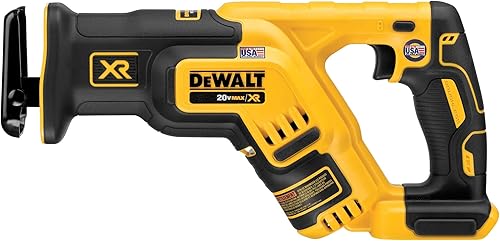
The DEWALT DCS380B is the most reviewed reciprocating saw in this category with 12,952 verified ratings at 4.8 stars and a $99 price that suits homeowners and tradespeople alike. It runs on the DEWALT 20V MAX platform at 3,000 RPM with a 100-watt motor and handles an 8-inch cut capacity in a 2.41-kilogram body. Based on specs and verified owner reviews, it is the benchmark 20V reciprocating saw for buyers who want the broadest performance validation before spending more.
Best for: DEWALT 20V MAX users and first-time reciprocating saw buyers who want a proven, well-reviewed option at an accessible price
Pros
12,952 reviews at 4.8 stars, the strongest owner validation in the category
3,000 RPM on the 20V MAX platform fits existing DEWALT households
$99 is among the lowest prices in the 20V reciprocating saw segment
8-inch cut capacity handles standard framing and demo work
Cons
Sold tool-only; 20V MAX battery and charger sold separately
100-watt motor is lighter than corded competitors for heavy sustained cutting
Bottom line: The best-supported reciprocating saw in the data by a wide margin on review count. At $99 tool-only it is the obvious starting point for any 20V DEWALT household.
The DEWALT DCS367B earns its place as the pro favorite with 1,000 units bought last month, 10,785 reviews at 4.8 stars, and a compact 14.5-inch body that fits tight framing bays and mechanical spaces. At $199 it runs at 2,800 RPM with a 100-watt motor and offers a 14.5-inch blade capacity, making it a common choice for electricians and plumbers in finished spaces. The review depth and demand figures confirm it is not just popular but a sustained trade standard.
Best for: Electricians, plumbers, and contractors who need a slim 20V DEWALT reciprocating saw for confined-space work
Pros
1,000 bought last month signals strong ongoing trade and contractor demand
Compact 14.5-inch body fits tight wall cavities and mechanical spaces
10,785 reviews at 4.8 stars on the 20V MAX platform
14.5-inch blade capacity handles larger demo cuts
Cons
$199 is the highest price in the 20V entry segment among these picks
2,800 RPM is slightly lower than the DCS380B's 3,000 RPM
Tool only; battery and charger sold separately
Bottom line: High demand and a proven track record across 10,785 reviews make this the natural upgrade pick for DEWALT 20V professionals. The compact body is the defining feature.
The DEWALT DCS369B is the highest-demand tool in this entire ranking at 2,000 units bought last month, more than any other pick. At just 1 pound on the 20V MAX platform with a 40-watt motor and a 12.5-inch cut capacity, it was designed for single-hand use in overhead and confined positions. The 8,356 reviews at 4.8 stars at $137.27 make the weight-to-value ratio exceptional for its class.
Best for: Electricians, plumbers, and DIYers who need a one-hand compact saw for pruning, conduit work, or overhead cuts
Pros
2,000 bought last month, the highest monthly demand in the entire group
Just 1 pound body weight for single-handed and overhead cutting
8,356 reviews at 4.8 stars confirm real-world reliability at scale
20V MAX fits existing DEWALT battery households
Cons
40-watt motor limits heavy demolition compared to full-size saws
No stroke speed published in the listing
Tool only; battery and charger sold separately
Bottom line: The data's most-purchased reciprocating saw by a large margin. At 1 pound with 4.8 stars across 8,356 reviews, this is the pick when weight and maneuverability matter most.
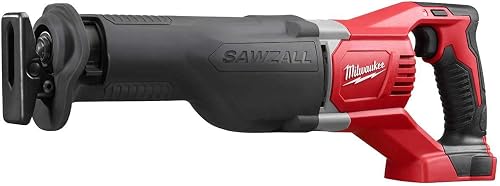
The Milwaukee 2719-20 carries 6,485 owner reviews at 4.8 stars and 700 units bought last month, making it the top Milwaukee choice in this ranking by both review depth and demand. At $174 it positions between DEWALT's entry and pro tiers for platform users who want Milwaukee quality. Published specs were not available in this listing, but the review score and demand figures reflect strong real-world performance that Milwaukee M18 users consistently reward.
Best for: Milwaukee M18 platform users who want the best-reviewed compact reciprocating saw in the Milwaukee lineup
Pros
6,485 reviews at 4.8 stars, the highest-reviewed Milwaukee pick in the group
700 units bought last month shows sustained trade and DIY demand
$174 price competes directly with mid-tier 20V options
Fits the Milwaukee M18 battery platform
Cons
No specs published; stroke speed, voltage, and motor power not disclosed in the listing
Tool only; M18 battery and charger sold separately
Higher price than the PORTER-CABLE PCC670B and RYOBI alternatives for buyers without M18 batteries
Bottom line: The review count and demand are hard to argue with. If you are already on Milwaukee M18, this is the most validated choice in the data.
The DEWALT DWE305 is the corded benchmark in this category, drawing from a 120-volt outlet with a 1,100-watt motor spinning at 9,000 RPM for sustained heavy-duty cutting. At 8 pounds and 19.38 inches long with an 8-inch cut capacity, it handles extended demo shifts without any battery drain concern. The 3,904 reviews at 4.8 stars and 400 monthly purchases confirm it as the primary corded pick for contractors who need consistent power all day.
Best for: Contractors and remodelers who primarily work near power outlets and want maximum sustained cutting power without battery management
Pros
1,100-watt motor at 9,000 RPM delivers the highest motor-and-speed combination among all picks
No battery needed; constant power for extended demolition work
3,904 reviews at 4.8 stars, the strongest corded track record in the group
8-inch cut capacity handles lumber, pipe, and drywall combinations
Cons
Cord limits reach; not suitable for remote sites without power access
8 pounds is heavier than most cordless picks in this ranking
19.38-inch length is too long for very tight cavities
Bottom line: The best corded pick in the data by every metric: highest motor wattage, highest RPM, and the strongest review score among corded options. Choose it when portability is not a priority.
The Milwaukee 2621-20 at $149 brings a 3,000-RPM full-size reciprocating saw to the M18 platform, earning 1,800 reviews at 4.8 stars. The 6.3-inch cut capacity and 7.7-pound body suit standard framing and rough plumbing work. At $25 less than the 2719-20, it represents solid value for M18 users who need a full-sized saw without spending up for the compact variant.
Best for: Milwaukee M18 users who want a full-size 3,000-RPM reciprocating saw at the most accessible Milwaukee price point
Pros
3,000 RPM listed speed on the M18 platform
4.8 stars from 1,800 owner reviews
$149 is the most accessible full-size Milwaukee in this group
6.3-inch cut capacity covers framing and standard demo tasks
Cons
No voltage published in the listing for independent verification
7.7 pounds is heavier than compact alternatives
200 monthly purchases is the lowest demand figure among the Milwaukee picks here
Bottom line: Good value for the Milwaukee ecosystem at $149, with 4.8 stars backing the purchase. Owner satisfaction is consistent even with lower monthly purchase volume.
The Milwaukee 2821-20 lists a 3,000-watt motor in its specs, the highest published motor power of any cordless tool in this group, paired with a listed speed of 3,000 on the 18-volt M18 platform. At 6.8 pounds and 10 inches long, it balances power and maneuverability in a way the compact class cannot. The 4.8-star rating from 1,354 reviews and 500 monthly purchases confirm demand from M18 users tackling heavier work. The 3,000-watt figure is unusually high for an 18-volt cordless tool; verify with the seller if this spec is critical to your application.
Best for: Milwaukee M18 users who need the most motor output available in a cordless reciprocating saw for aggressive cutting applications
Pros
3,000-watt listed motor power, highest among all cordless picks
$189 is among the pricier tool-only options in the 18V tier
3,000-watt motor spec is unusually high for 18V and warrants seller verification
Bottom line: The most powerful listed cordless saw in the group by a wide margin. The 4.8-star score and 500 monthly buyers back the performance claims for M18 platform users.
The Makita XRJ05Z runs on the Makita 18V LXT battery platform at a listed speed of 2,300 with a 72-watt motor, weighing 7.8 pounds with a 4-inch cut capacity at $179.99. It earns 4.8 stars from 1,100 verified reviews and moves 300 units monthly, making it the strongest Makita option in this ranking. The 18V LXT ecosystem is one of the most battery-compatible platforms available, which is a key advantage for shops already running Makita drills, impact drivers, and sanders.
Best for: Makita 18V LXT platform users who want a reliable reciprocating saw from the same battery family as their existing tools
Pros
4.8 stars from 1,100 reviews on the widely compatible Makita 18V LXT platform
Compatible with the broad Makita 18V LXT battery family across tool types
Variable speed for controlled cuts in different materials
Cons
72-watt motor is lighter than corded and most full-size cordless competitors
4-inch cut capacity is the smallest among the top picks
$179.99 is premium relative to the motor wattage offered
Bottom line: The right pick if your shop runs on Makita 18V LXT. The 4.8-star score is solid but the 72-watt motor and 4-inch capacity are honest limitations for heavy work.
The Makita XRJ08Z brings a 1-pound compact body with an 8-inch cut capacity to the 18V LXT platform, priced at $184.50 with 4.8 stars from 442 reviews. The combination of a lightweight frame and a full 8-inch blade depth is uncommon in the compact class and suits trades where both portability and cut reach matter. Demand is lower at 100 monthly purchases, but the rating indicates high satisfaction among buyers who choose it.
Best for: Makita 18V LXT users who need an 8-inch compact saw for confined or overhead work
Pros
1-pound body with an 8-inch cut capacity, an uncommon combination in the compact class
4.8 stars across 442 reviews on the Makita 18V LXT platform
Compact 14.38-inch body length for tight-access work
Fits the Makita 18V LXT battery family
Cons
442 reviews is a smaller validation base than the top picks
100 monthly purchases reflects niche rather than mainstream demand
No stroke speed or motor wattage published in the listing
Bottom line: A specialized pick for Makita 18V users who specifically need the 8-inch capacity in a compact body. Lower volume but consistent 4.8-star owner satisfaction supports the choice.
The Milwaukee 2719-20 in the Red and Black variant runs on the M18 18-volt platform with a 14.25-inch body, priced at $159.90 and earning 4.8 stars from 413 reviews. It shares the model designation with the higher-volume primary listing but represents a separate variant for buyers specifically selecting the 18-volt version. At $14.10 less than the primary listing, it can offer better value for M18 18V platform users who confirm compatibility with their charger and batteries.
Best for: Milwaukee M18 18-volt users seeking a compact reciprocating saw at a slightly lower price than the primary 2719-20 listing
Pros
4.8 stars across 413 owner reviews
$159.90 is $14.10 less than the primary 2719-20 listing
Compact 14.25-inch body at 3-inch height for tight spaces
18-volt M18 platform confirmed in the published specs
Cons
Fewer reviews (413) than the primary 2719-20 listing (6,485)
No stroke speed, motor power, or cut capacity published in the listing
100 monthly purchases is lower demand than the primary variant
Bottom line: A solid alternative for M18 18V users, though the primary 2719-20 listing has far more review validation. Choose based on battery voltage compatibility and current pricing.
The PORTER-CABLE PCC670B at $105.22 is the most affordable 20-volt option with a substantial review base, holding 4.7 stars from 4,100 reviews and 200 monthly purchases. At 3.75 pounds it is one of the lighter full-size cordless saws in the group, with a 14.5-inch cut capacity and a listed speed of 1,500 RPM. The 20V MAX platform is compatible with DEWALT 20V MAX batteries, adding practical value for mixed-brand households.
Best for: Budget-focused buyers or DEWALT 20V MAX platform users who want a lightweight second saw around the $105 mark
Pros
4.7 stars from 4,100 reviews, a large and credible review base at the price
3.75 pounds is among the lightest in the full-size cordless class
$105.22 with 14.5-inch cut capacity is strong value per dollar
20V MAX platform compatible with DEWALT batteries
Cons
1,500 RPM is the slowest listed speed among the top 13 picks
No motor wattage or amperage published in the listing
200 monthly purchases is moderate demand for a tool at this price point
Bottom line: The best value in the 20V segment for buyers prioritizing price and weight. The 4.7-star score across 4,100 reviews confirms reliable performance at the $105 tier.
The Milwaukee 2625-20 at $109 is the most budget-friendly Milwaukee option in this ranking, with 4.7 stars from 3,057 reviews and 400 monthly purchases. No specs were published in the listing, but the review volume and demand figures show it moves steadily across DIY and trade applications. For Milwaukee M18 users who need a spare saw or an entry point into the platform, the $109 price is significantly lower than the 2719-20 and 2821-20.
Best for: Milwaukee M18 platform users who want the lowest-cost entry into the reciprocating saw category
Pros
4.7 stars from 3,057 reviews, the most-reviewed Milwaukee budget option
400 bought last month shows consistent category demand
$109 is the most accessible Milwaukee price in this group
Fits the Milwaukee M18 battery platform
Cons
No specs published; stroke speed, voltage, and motor power not disclosed
Lowest spec transparency among all Milwaukee picks here
Entry-level positioning relative to the 2821-20 and 2719-20
Bottom line: The budget entry for Milwaukee M18 users. Review depth at 3,057 and 400 monthly purchases justify confidence in the purchase despite absent published specs.
The RYOBI PCL515B at $49.02 is the lowest-priced pick in this ranking and one of the best sellers by monthly demand at 1,000 units purchased last month. Running on the RYOBI 18V ONE+ platform, it weighs 3.75 pounds with a 6-inch cut capacity on a 16-inch body and earns 4.7 stars from 1,545 reviews. For first-time buyers or RYOBI ONE+ households, the combination of price, demand, and rating makes it the clear budget champion.
Best for: Budget buyers, first-time reciprocating saw owners, and RYOBI 18V ONE+ platform users looking for an affordable entry-point tool
Pros
$49.02 is the lowest price among the top 13 picks
1,000 bought last month, second-highest monthly demand in the group
4.7 stars from 1,545 reviews confirms real buyer satisfaction at budget pricing
3.75 pounds is among the lightest in the segment
Cons
6-inch cut capacity is limited for structural lumber or heavy demo material
18V ONE+ platform is less powerful than DEWALT 20V FUEL or Milwaukee M18 FUEL tier
No stroke speed or motor wattage published in the listing
Bottom line: The price and demand tell the story. At $49.02 with 1,000 monthly purchases and 4.7 stars, the RYOBI PCL515B is the most accessible quality reciprocating saw in the group.
Corded vs Cordless: Matching Power Source to Your Work
Corded models draw from a 120-volt outlet and deliver consistent power without battery management. The DEWALT DWE305 at $141.50 runs a 1,100-watt motor at 9,000 RPM and suits long demolition shifts near a power source. Cordless 20V models like the DEWALT DCS380B at $99 give you freedom to move across a job site or work in spaces without outlets, with a trade-off in sustained motor output. If most of your work is in a shop or within cord reach, corded is the more cost-effective choice; if you are on scaffolding, in attics, or outdoors, cordless wins on convenience.
Battery Platform Compatibility
The battery platform you already own should drive your buying decision before brand preference. DEWALT uses 20V MAX (the DCS380B, DCS367B, and DCS369B all share this platform), Milwaukee uses M18 (the 2719-20, 2821-20, and 2621-20), and Makita uses 18V LXT (the XRJ05Z and XRJ08Z). RYOBI's 18V ONE+ platform is a lower-cost entry covered by the PCL515B at $49.02. These platforms are not interchangeable between brands, so buying tool-only and using your existing batteries is the best value if you already have compatible packs.
Stroke Speed and Motor Power
Stroke speed (listed in RPM for these saws) affects how fast you cut through material, while motor wattage determines how much resistance the saw can push through. Published speeds here range from 1,500 RPM on the PORTER-CABLE PCC670B to 9,000 RPM on the corded DEWALT DWE305. Cordless motor power ranges from 40 watts on the compact DEWALT DCS369B to 3,000 watts listed on the Milwaukee 2821-20. For standard framing and rough-in work, any model at 3,000 RPM is adequate; for sustained heavy demolition in steel or thick lumber, prioritize motor wattage.
Body Size and Weight for Your Application
Compact one-handed saws like the DEWALT DCS369B at 1 pound and the Makita XRJ08Z at 1 pound are built for overhead work, tight spaces, and single-hand operation. Full-size models like the Milwaukee 2821-20 at 6.8 pounds and the DEWALT DWE305 at 8 pounds deliver more leverage and power for heavy cuts but are harder to control in confined areas. If you routinely work in wall cavities, conduit runs, or above your head, weight matters more than motor size; for open-site demolition, go full size.
Blade Capacity and Cut Depth
Blade capacity is the maximum blade length the saw accepts and a rough proxy for how thick a material it can cut through in a single stroke. The Makita XRJ05Z lists a 4-inch capacity at the low end while the DEWALT DCS367B and PORTER-CABLE PCC670B both list 14.5 inches at the top. For residential rough-in through standard framing lumber and PVC, a 6-inch to 8-inch blade covers most jobs. The DEWALT DCS380B at 8 inches and the RYOBI PCL515B at 6 inches represent practical mid-range options.
Matching Budget to Needs
The RYOBI PCL515B at $49.02 is a genuine entry-level option rated 4.7 stars with 1,000 monthly purchases, not a disposable tool. The PORTER-CABLE PCC670B at $105.22 adds a larger review base and a 14.5-inch capacity for $55 more. DEWALT's mid-tier DCS380B at $99 and DCS369B at $137.27 deliver the best review depth in the category. The top-end picks, the DEWALT DCS367B at $199 and the Milwaukee 2821-20 at $189, serve professionals who need a specific compact or high-power feature set rather than just a saw that cuts.
Common mistakes to avoid
Buying tool-only without confirming you already own compatible batteries at the correct voltage for that brand's platform
Choosing by voltage label alone rather than checking motor wattage and stroke speed, which have more direct impact on cutting performance
Picking a 1-pound compact saw for heavy demolition work; models like the DEWALT DCS369B excel at pruning and conduit but are not rated for sustained structural cutting
Ignoring body length when shopping for confined spaces; a 19-inch corded saw like the DEWALT DWE305 will not reach where a 14.5-inch compact body will
Assuming all T-shank blades fit all saws; confirm blade compatibility before purchasing replacement or specialty blades
Overlooking motor wattage on corded picks; a 710-watt motor performs differently than a 1,100-watt or 1,560-watt unit on thick material
Frequently asked questions
Do I need a 20V or 18V reciprocating saw?
The voltage label reflects the battery platform designation, not a precise electrical difference. DEWALT labels its platform 20V MAX, Milwaukee labels M18 at 18 volts, and Makita's LXT platform also runs at 18 volts. These platforms are not interchangeable between brands. Buy to match the batteries you already own; if you have none, the DEWALT 20V MAX platform has the widest selection and the deepest review base in this category.
What cut capacity do I actually need for home projects?
For standard residential work including framing lumber, PVC pipe, and drywall, a 6-inch to 8-inch cut capacity covers most jobs. The DEWALT DCS380B at 8 inches and the RYOBI PCL515B at 6 inches handle the majority of DIY and rough-in tasks. Longer capacities like 14.5 inches on the DEWALT DCS367B or PORTER-CABLE PCC670B are mainly useful for thick demolition material or cutting through multiple layers.
Can a reciprocating saw cut metal as well as wood?
Yes. Cutting metal requires a bi-metal blade with a higher teeth-per-inch count than a standard wood blade. All saws here use T-shank blade clamps that accept standard bi-metal blades. Reduce stroke speed when cutting metal to extend blade life and prevent overheating. The pneumatic Ingersoll 429 at 10,000 RPM and the corded DEWALT DWE305 at 9,000 RPM are the fastest options for metal cutting applications.
Is a heavier saw always more powerful?
Not necessarily. The DEWALT DCS369B at 1 pound uses a 40-watt motor designed for compact pruning and conduit work, while the Makita XRJ05Z at 7.8 pounds uses a 72-watt motor in a full-size body for platform users who need more capacity. Weight reflects body design and battery platform more than raw power. Check motor wattage for a direct power comparison rather than relying on weight alone.
Should I buy a kit with batteries included or tool-only?
If you already own batteries from the same platform, buying tool-only is the better value by a significant margin. A spare 20V MAX battery can run multiple DEWALT tools. If you are starting fresh on a new platform, a kit that includes at least one battery and a charger will cost more upfront but less than purchasing the tool and battery separately. The RYOBI PCL515B at $49.02 is a tool-only option, but RYOBI 18V ONE+ kits are available if you need to start the platform.
What should I look for if the listing does not publish all the specs?
Several picks here, including the Milwaukee 2719-20 (B076JHJKR8) and the Milwaukee 2625-20, do not publish stroke speed, motor power, or cut capacity in their listings. In those cases, lean on the review count and bought-last-month demand as the strongest available signals of real-world performance. A saw with 6,485 verified 4.8-star reviews has been validated by buyers across a wide range of tasks even when the spec sheet is incomplete.
Final recommendation
The DEWALT DCS380B earns Best Overall for its unmatched review base of 12,952 at 4.8 stars and a $99 price that fits most 20V DEWALT households. Pros who need a slim compact body will find the DEWALT DCS367B at $199 justifies the upgrade, while the DEWALT DCS369B at just 1 pound and 2,000 monthly purchases is the highest-demand tool in the group by a wide margin. Milwaukee M18 users should start with the 2719-20 for the deepest review validation in that platform, or step up to the 2821-20 for the highest listed motor power among cordless picks. For buyers starting from scratch on a budget, the RYOBI PCL515B at $49.02 with 4.7 stars and 1,000 monthly purchases is the easiest entry point in the ranking.
We use necessary cookies to keep the site working. With your permission, we also use functional, analytics, and marketing cookies. Read our Cookie Policy.