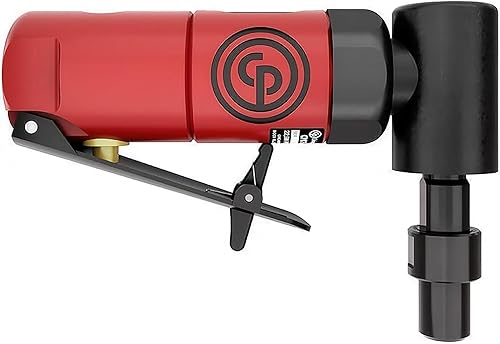
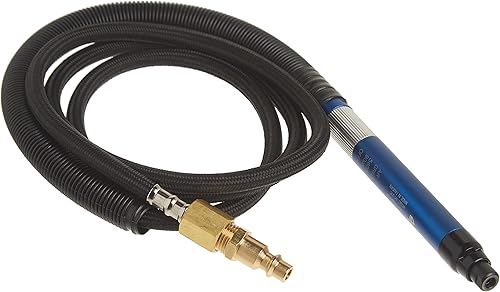
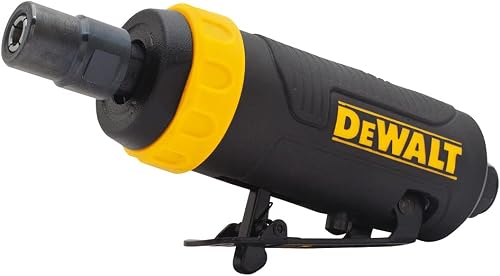
Die grinders are high-speed rotary tools built for precision material removal, deburring, polishing, and porting work in tight spaces. They run at 20,000 to 56,000 RPM through a 1/4-inch collet and come in three power configurations in this category: cordless on 12-volt or 20-volt batteries, pneumatic driven by an air compressor, and corded electric on 120 volts. The 39 grinders reviewed here range from $20.79 to $429.95, covering budget shop tools through professional cordless systems.
To compile this ranking, we sorted by verified monthly purchase volume and total owner review count as the strongest indicators of real-world demand, then confirmed a 3.8-star minimum rating. Specs come directly from product listings rather than promotional copy. The top 13 picks span all power sources and price tiers so buyers at every budget and work context can identify the right fit.
Short answer: The DEWALT DCG426B ($140.00) is the best-rated die grinder in this lineup at 4.8 stars across 2,636 reviews, running 20-volt cordless at 25,000 RPM with 500 purchases last month. For budget shop use with an air compressor, the Ingersoll 3101G at $50.98 has 600 purchases per month and 2,583 verified reviews, delivering reliable 20,000 RPM performance without a battery. Both have the review depth to back their ratings.
The DEWALT DCG426B runs on a 20-volt battery at 25,000 RPM and weighs 3 pounds, delivering the combination of speed, portability, and proven demand that earns it the top position. At $140.00, it has collected 2,636 owner reviews at an outstanding 4.8-star rating, and 500 buyers purchased it last month. The cordless design makes it practical on job sites and in vehicles where dragging a hose is not an option. As a tool-only listing, buyers get maximum flexibility to use their existing 20-volt DEWALT battery.
Best for: Job-site pros and tradespeople already on the DEWALT 20-volt platform
Pros
4.8-star rating across 2,636 reviews, highest in this category
25,000 RPM on a 20-volt cordless platform
500 purchases last month confirms strong sustained demand
3-pound weight for a cordless die grinder
No hose or outlet cord limiting reach
Cons
Sold tool-only, battery not included
Higher upfront cost than comparable pneumatic options
Bottom line: The top-rated die grinder in this category by both score and owner demand. Best choice if you want a reliable cordless model without adding a new battery ecosystem.
At $74.99, the Chicago CP875 is the most affordable 4.7-star die grinder in this lineup. It runs at 22,500 RPM on air power with a 220-watt motor, weighs 15.84 ounces, and fits cleanly into tight workspaces at 4.88 inches in length. With 1,016 owner reviews and 200 purchases last month, it has built a consistent track record in production shops where air is already plumbed.
Best for: Shop technicians who already run an air compressor and want a budget-friendly 4.7-star model
Pros
4.7-star rating at $74.99
22,500 RPM at 220 watts of motor output
Ultra-compact at 15.84 ounces and 4.88 inches long
1,016 verified reviews confirm reliability
Cons
Requires air compressor with sufficient CFM and 90 PSI
Published spec detail is limited beyond motor power and speed
Bottom line: Proven air die grinder at a fair price, backed by over 1,000 reviews. Solid pick for any shop with air already plumbed.
The DEWALT DWE4887 brings corded reliability to die grinder work, running at 25,000 RPM from a standard 120-volt outlet without needing a compressor or battery. At $171.00, it weighs 4.74 pounds and carries 952 reviews at a 4.7-star rating with 100 purchases last month. It is the heaviest among the top-ranked picks, which is worth considering for overhead or extended single-hand work.
Best for: Shop users who want a no-hassle corded grinder at bench height without managing a compressor
Pros
25,000 RPM with no battery or compressor required
4.7 stars across 952 verified reviews
Unlimited run time from 120-volt outlet
No battery platform compatibility to worry about
Cons
4.74 pounds is heavier than most cordless and pneumatic competitors
Cord limits reach compared to cordless models
Bottom line: The leading corded die grinder in this category. Dependable 25,000 RPM performance without air infrastructure or battery management.
The Astro 1221 is a pneumatic die grinder at $128.62, rated 4.7 stars across 310 reviews, running at 25,000 RPM on dimensions of 12 by 7 by 2 inches. The listed weight of 0.1 pounds is unusually low relative to the published dimensions and is worth verifying on the product page before ordering. Owners rate it highly, and the 4.7-star average across 310 reviews reflects strong satisfaction with its handling precision.
Best for: Die and mold finishers who want a highly rated precision pneumatic tool
Pros
4.7-star rating across 310 verified reviews
25,000 RPM for precision air-powered grinding
Pneumatic design suits sustained shop sessions
Cons
Listed weight of 0.1 pounds versus the 12 x 7 x 2-inch dimensions warrants verification before purchase
No monthly purchase volume in current data
Limited published spec detail beyond speed and dimensions
Bottom line: A well-reviewed pneumatic option at 25,000 RPM and $128.62. Confirm the published weight against the product page before ordering.
The Ingersoll 3101G has the highest monthly purchase rate among pneumatic models in this list at 600 units per month, backed by 2,583 total reviews at 4.6 stars. At $50.98, it spins at 20,000 RPM and measures 9.5 by 6 by 2 inches. The combination of proven demand, strong review volume, and sub-$55 pricing makes it the benchmark for shop-use pneumatic die grinders in this category.
Best for: High-volume shop environments looking for a reliable, budget-friendly air die grinder
Pros
600 purchases per month, strongest demand of any air grinder in this list
$50.98 makes it one of the lowest-cost options with this review volume
2,583 owner reviews at 4.6 stars
20,000 RPM for general grinding and deburring
Cons
20,000 RPM is lower than high-speed specialty models in this list
Requires compressor and air hose setup
Bottom line: The highest-demand pneumatic die grinder in this lineup. At $50.98 with 2,583 reviews, it is a proven workhorse for shops that already run air.
At 56,000 RPM, the Astro 218 spins faster than any other die grinder in this top 13. Priced at $47.99 and weighing just 12.8 ounces, it is built for precision deburring, high-speed abrasive work, and small carbide burrs that perform best at elevated RPM. It holds a 4.6-star rating across 1,091 owner reviews with 100 purchases last month.
Best for: Machinists and precision fabricators working with high-speed mounted abrasive points
Pros
56,000 RPM for fine detail and high-speed abrasive applications
12.8 ounces for extended use without significant fatigue
4.6 stars across 1,091 reviews
$47.99 competitive price for the RPM output
Cons
High RPM is excessive for standard general-purpose deburring tasks
Requires air compressor with appropriate CFM
Bottom line: If your work demands high RPM over high torque, the Astro 218 at 56,000 RPM and $47.99 is the clear choice in this category.
The 315-22 air die grinder at $35.58 pairs a 20,000 RPM speed with an 800-watt motor in a package weighing 0.88 kilograms. With 957 owner reviews at a 4.6-star rating and 300 purchases last month, it holds its own against more expensive brand-name options. The 800-watt motor output is among the higher figures for an air-powered model at this budget price point.
Best for: DIYers and light shop users who want a budget-friendly air grinder with a stronger motor spec
Pros
$35.58 with 957 reviews at 4.6 stars
800-watt motor output for an entry-priced air grinder
300 units purchased last month confirms active buyer demand
20,000 RPM for standard grinding tasks
Cons
0.88 kilograms is heavier than lightweight competitors in this list
Brand documentation and support are minimal
Bottom line: Solid value for under $40, with more motor output than most budget air grinders and active buyer demand confirming it works as advertised.
The DEWALT DWMT70783 is a corded electric grinder at $53.99 running at 25,000 RPM from 120 volts, measuring 7 by 3.2 by 2.3 inches and listed at 0.5 pounds. Those compact dimensions make it one of the smallest corded options in this section. It carries 747 reviews at a 4.6-star rating, and the $53.99 price puts high-RPM corded performance within reach for budget-minded bench users.
Best for: Bench users who want compact corded 25,000 RPM performance on a tight budget
Pros
25,000 RPM on a 120-volt outlet at $53.99
Compact 7 x 3.2 x 2.3-inch footprint
4.6 stars across 747 reviews
No battery platform or compressor required
Cons
Listed weight of 0.5 pounds for a corded grinder is unusually low and worth verifying on the product page
Cord limits reach compared to cordless models
Bottom line: The most affordable way to get DEWALT-branded corded die grinder performance at 25,000 RPM. Verify the published weight against the listing before ordering.
The Milwaukee 2486-20 runs at 24,500 RPM cordless and weighs just 1.2 pounds in an 11 by 4 by 4-inch frame. At $186.70 with 686 reviews at 4.6 stars and 200 purchases last month, it appeals to tradespeople who prioritize low weight for overhead and precision work. It is sold as a tool-only listing, so verify battery compatibility before purchasing.
Best for: Milwaukee battery platform users who need a light cordless die grinder for job-site and overhead tasks
Pros
24,500 RPM at only 1.2 pounds
4.6 stars across 686 reviews
200 units purchased last month
Compact 11 x 4 x 4-inch frame for tight-access work
Cons
$186.70 is a premium over pneumatic alternatives with similar RPM
Tool-only listing: battery not included
Bottom line: Light, fast, and well reviewed. The Milwaukee 2486-20 earns its price for tradespeople already in the Milwaukee ecosystem.
The Ingersoll 5102MAX is a professional-grade air die grinder at $123.21, running at 20,000 RPM and weighing 0.64 kilograms. It holds 623 reviews at a 4.6-star rating with 200 purchases last month. Ingersoll's industrial pneumatic reputation supports the price premium over lighter-duty air grinders, though the published spec detail is limited to speed and weight.
Best for: Industrial shops and production environments where Ingersoll brand reliability is prioritized over budget
Pros
4.6 stars across 623 reviews at an industrial price point
200 purchases per month shows consistent professional demand
Ingersoll brand associated with industrial pneumatic tool quality
20,000 RPM for sustained professional grinding sessions
Cons
$123.21 is higher than several competing air grinders with similar published specs
Published spec detail is limited beyond speed and weight
Bottom line: The premium Ingersoll air grinder for shop professionals who trust the brand. Consistent demand and solid ratings back the price.
The Astro 219 is a pneumatic die grinder priced at $171.21 and listed at 3.2 pounds, making it the heaviest pneumatic model among the top picks. It runs at 25,000 RPM and carries 563 reviews at a 4.6-star rating. The heavier build suggests a more robust internal construction suited for sustained heavy-duty grinding rather than lightweight precision tasks.
Best for: Heavy fabrication shops needing a durable pneumatic grinder for sustained production grinding sessions
Pros
25,000 RPM pneumatic speed
4.6 stars across 563 reviews
3.2-pound build suggests durable construction for heavy-duty use
Cons
$171.21 is high for a pneumatic model with limited published specs beyond speed and weight
3.2 pounds is noticeably heavier than most competing die grinders
No monthly purchase data in current records
Bottom line: The Astro 219 targets buyers who want a robust pneumatic tool built for heavy use. Verify full specs on the product page before committing at $171.21.
The Milwaukee 3485-20 records 1,000 purchases last month, the highest monthly purchase figure of any die grinder in this entire category. At $184.97, it runs on a 12-volt lithium-ion battery and weighs 1.65 pounds. With 159 reviews at a 4.7-star rating, the review count is still building, but the raw purchase volume signals strong early adoption from active buyers.
Best for: Milwaukee 12-volt platform users looking for the most in-demand cordless die grinder available right now
Pros
1,000 purchases last month, highest demand in this entire category
4.7-star rating with a growing review base
1.65 pounds for a 12-volt cordless model
Strong early adoption signals product confidence from buyers
Cons
Only 159 reviews compared to more established picks in this list
Full published specs are limited beyond voltage and weight
Tool-only listing: battery not included
Bottom line: The most purchased die grinder in this section right now. The 4.7-star average is holding up even as sales accelerate, which is a positive early signal.
The Milwaukee 2485-20 is the highest-priced die grinder in this top-13 list at $429.95. It runs at 24,500 RPM on a 12-volt battery, weighs 1.6 pounds, and measures 4.4 by 2 by 8.7 inches. With 319 reviews at a 4.6-star rating, it caters to professional users who need premium cordless M12 performance without compromising on tool weight.
Best for: Professional Milwaukee M12 users who want the top-shelf cordless die grinder and already own the battery platform
Pros
24,500 RPM on a 12-volt battery platform
1.6 pounds for a premium cordless die grinder
4.6 stars across 319 verified reviews
Compact 4.4 x 2 x 8.7-inch profile for tight-access work
Cons
$429.95 is the highest price in this top-13 list
Tool-only listing, 12-volt battery not included
No monthly purchase data in current records
Bottom line: Premium pricing for the Milwaukee M12 professional die grinder. Makes sense only if you are already invested in the 12-volt ecosystem and need the lightest possible cordless tool.
Cordless, Pneumatic, or Corded: Picking the Right Power Source
Power source is the single most important decision when choosing a die grinder. Pneumatic models like the Ingersoll 3101G ($50.98) and Astro 218 ($47.99) deliver high torque and low weight without batteries, but they require a compressor with sufficient CFM at 90 PSI. Cordless models like the DEWALT DCG426B ($140.00, 20-volt) and Milwaukee 2486-20 ($186.70) provide full mobility on job sites and eliminate hose drag in tight bays, but you need a matching battery and charger. Corded electric options like the DEWALT DWE4887 ($171.00, 120-volt) offer unlimited run time at a fixed bench without managing a compressor or swapping batteries, making them the low-maintenance choice for dedicated shop stations.
Understanding RPM and Matching It to Your Attachments
Die grinder RPM varies widely in this category, from 20,000 RPM on the Ingersoll 3101G up to 56,000 RPM on the Astro 218. Standard carbide burrs and mounted grinding stones work well at 20,000 to 25,000 RPM, which covers models like the DEWALT DCG426B (25,000 RPM), DEWALT DWE4887 (25,000 RPM), and Milwaukee 2486-20 (24,500 RPM). High-speed abrasive points and fine carbide burrs designed for detail work sometimes specify free speeds above 30,000 RPM, where models like the Astro 218 (56,000 RPM) are appropriate. Check the rated RPM range on your accessories before selecting a grinder, since running an attachment above its rated speed is a safety hazard and running far below it produces inefficient results.
Weight and Ergonomics for Extended Work
Weight differences in this category are significant and directly affect fatigue during long sessions. The Astro 218 weighs just 12.8 ounces, and the Milwaukee 2486-20 weighs 1.2 pounds, both suitable for overhead work or detailed finishing that demands fine motor control. At the other end, the DEWALT DWE4887 weighs 4.74 pounds and the Astro 219 lists at 3.2 pounds, which is appropriate for heavy-duty work but tiring over a two-hour deburring session. If you are doing weld cleanup, porting, or extended deburring tasks, a lighter model in the 12-ounce to 2-pound range reduces fatigue noticeably. Heavier models tend to reflect more robust builds suited to repetitive production grinding.
Collet Size and Accessory Compatibility
Nearly every die grinder in this section uses a standard 1/4-inch collet, which accepts the vast majority of mounted points, carbide burrs, grinding stones, and polishing attachments from major accessory brands. Right-angle die grinders orient the work head perpendicular to the body, giving access to surfaces that straight-body grinders cannot reach cleanly, such as tight bores, porting channels, and internal corners. The KJE Right Angle Die Grinder at $34.99 and 25,000 RPM is an example of this form factor in the broader category. Before ordering accessories separately, confirm the collet size matches the attachment shank diameter, especially when mixing brands.
Budget Tiers: Where the Value Is
This lineup spans from $35.58 to $429.95. The strongest value zone sits between $45 and $75. The Ingersoll 3101G at $50.98 and Astro 218 at $47.99 both carry over 1,000 reviews and serve professional shop work reliably at that price. Stepping up to $74.99 to $140.00 brings brand-name cordless options like the Chicago CP875 and DEWALT DCG426B with deep review histories and broad battery platform support. Beyond $170.00, you are paying for a specific battery ecosystem, professional brand assurance, or premium build quality. The Milwaukee 2485-20 at $429.95 makes sense only for M12 users already invested in that platform. For most DIYers and small shops, the $45 to $75 range covers the majority of real work needs without overspending.
Common mistakes to avoid
Ordering a pneumatic die grinder without verifying your compressor's CFM and PSI output. If the compressor cannot sustain the rated inlet pressure under load, the grinder will lose speed and torque mid-task.
Buying a cordless tool-only listing without confirming you own a compatible battery and charger. Milwaukee M12, DEWALT 20-volt, and Makita 18-volt batteries are not interchangeable.
Selecting RPM based on price rather than attachment spec. Running an accessory above or below its rated free-speed range causes poor results and accelerates wear on both the tool and the bit.
Overlooking weight differences. A 4.74-pound tool like the DEWALT DWE4887 handles very differently from a 12.8-ounce model like the Astro 218 over an extended grinding session.
Confusing die grinders with angle grinders. Die grinders accept 1/4-inch shank mounted accessories through a collet. Angle grinders use disc wheels on a threaded arbor. They are not interchangeable.
Assuming all cordless die grinders work with the same battery. Always verify voltage and platform compatibility before purchasing a tool-only listing.
Frequently asked questions
What is a die grinder typically used for?
Die grinders handle tasks that require a small, high-speed spinning attachment: deburring metal edges, porting and polishing cylinder heads, cleaning up welds in confined spaces, shaping wood, and surface preparation before coating. They are not designed for heavy material removal or cutting large stock, where angle grinders or bench grinders are more appropriate.
Are pneumatic die grinders better than cordless for shop use?
In a shop with an air compressor already installed, pneumatic models like the Ingersoll 3101G ($50.98) and Astro 218 ($47.99) offer more torque per dollar, lower weight, and no battery to manage. Cordless models are better suited for job sites and situations where running an air hose is impractical. The right choice depends more on your existing shop setup than on raw performance differences.
What RPM should I look for in a die grinder?
Most general-purpose grinding and deburring falls in the 20,000 to 25,000 RPM range, which covers the majority of carbide burrs and mounted stone accessories. High-speed abrasive points designed for fine finishing specify RPM ranges above 30,000, and some specialty bits go up to 60,000. Match the grinder's free-speed RPM to the maximum RPM rating printed on your accessories for safe and effective operation.
Can I use a rotary tool in place of a die grinder?
Rotary tools use smaller 1/8-inch collets and are designed for very light material removal and craft work. Die grinders use 1/4-inch collets and run at higher torque, which means they can drive harder carbide burrs and remove material faster. The two share some overlap in fine detail work, but a rotary tool is not a substitute for heavy deburring, porting, or production grinding tasks.
What air pressure do pneumatic die grinders require?
Most pneumatic die grinders in this category operate at 90 PSI inlet pressure and require an adequate CFM supply to maintain rated speed under load. If your compressor drops below the required CFM during heavy use, the grinder will lose speed and torque. Always compare the tool's air consumption spec to your compressor's sustained output at 90 PSI before purchasing.
Do I need a right-angle die grinder or a straight body?
Straight-body die grinders are the standard, offering the widest accessory support and the highest RPM in most cases. Right-angle die grinders extend to surfaces perpendicular to the tool axis, which is essential in tight bores, internal corners, and porting work where a straight body cannot reach. If you regularly work in confined internal spaces, a right-angle model is worth having alongside a straight die grinder.
Final recommendation
The DEWALT DCG426B stands out as the top-rated cordless die grinder in this group at 4.8 stars and 2,636 reviews, while the Ingersoll 3101G at $50.98 leads the pneumatic segment with 600 purchases per month and 2,583 owner reviews. For the highest RPM in the category, the Astro 218 delivers 56,000 RPM at under 1 pound for fine precision work. If current demand is a deciding factor, the Milwaukee 3485-20 recorded 1,000 purchases last month at a 4.7-star rating. Match your power source to your shop setup, confirm RPM against your accessories, and this list has a proven pick at every price level from $35 to $185.
We use necessary cookies to keep the site working. With your permission, we also use functional, analytics, and marketing cookies. Read our Cookie Policy.