Polishers and buffers span a wider range than most buyers expect, from 12-amp corded rotary machines that professional detailers rely on for aggressive paint correction to 20-volt cordless tools for portable finishing work, bench-mounted buffers for shop and jewelry applications, and specialized lapidary machines for gemstone cutting. The 37 products reviewed for this list range from $26.94 to $699.00, with ratings between 3.9 and 4.7 stars, so the challenge is not finding a polisher but identifying the right one for the actual work you need to do.
Every pick here earned its position through verified monthly buyer demand, total review count, and a minimum 3.8-star rating floor. The ranked order weights real purchase frequency first, then review volume, then star rating, then price-to-spec value. Corded, cordless, and bench categories are each represented so the list is genuinely useful across automotive detailing, metalwork, and craft applications rather than optimized for one narrow use case.
Short answer: The DEWALT DWP849X ($249.95) is the best overall polisher, carrying 6,887 reviews, a 4.7-star rating, and 700 monthly purchases; its 12-amp corded motor at 3500 RPM handles everything from aggressive compounding to final polish. For buyers who want strong value from a proven orbital, the PORTER-CABLE 7424XP delivers 4.6 stars from 2,941 reviews at $159.00 and remains the most reliable entry point for safe automotive paint correction.
The DEWALT DWP849X is the most reviewed and most purchased polisher in the entire category, with 6,887 verified reviews and 700 monthly buyers backing a 4.7-star rating. Pulling 12 amps at 3500 RPM from a 120-volt outlet, it delivers the consistent rotary power that professional detailers use for compounding heavy oxidation and cutting through deep scratches in clear coat. At 10.4 lbs it is a substantial tool, but the weight reflects a robust direct-drive motor built for extended professional use. At $249.95 it sits at a price that serious hobbyists and working detailers can both justify.
Best for: Professional and serious hobbyist detailers tackling full paint correction on vehicles
Pros
12-amp motor at 3500 RPM handles compounding through final polish in one tool
6,887 reviews confirm long-term durability across professional and hobbyist use
4.7-star rating from the largest verified owner pool in the category
Corded 120-volt design delivers uninterrupted power for full-vehicle correction sessions
Cons
10.4 lbs causes fatigue during overhead or extended single-panel sessions
Rotary action demands practiced technique to avoid burning clear coat
Bottom line: The benchmark rotary polisher by every measurable signal: demand, reviews, and rating.
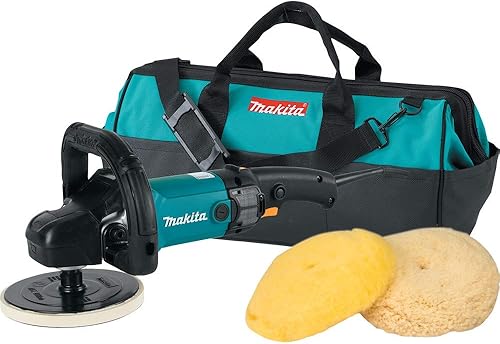
The Makita 9237CX3 is lighter than most professional rotary polishers at 7 lbs and draws 10 amps at 3000 RPM, making it a capable corded machine that reduces arm fatigue during long sessions compared to heavier rivals. It holds a 4.7-star rating from 1,259 verified owners, matching the top-rated DEWALT on quality score while offering a lighter weight profile for operators who spend extended time on full-panel correction. At $313.59 it is the priciest corded option in the top picks, and owners report consistent build quality that justifies the premium. The 120-volt corded design keeps power delivery stable regardless of session length.
Best for: Detailers who prioritize lighter weight and premium build quality in a corded rotary polisher
Pros
7 lbs is notably lighter than the DEWALT DWP849X, reducing arm fatigue on long jobs
4.7-star rating from 1,259 verified owners matches the top-rated pick on quality
10-amp motor at 3000 RPM provides controlled speed for polishing and compounding stages
Corded 120-volt design avoids battery management on extended detailing sessions
Cons
$313.59 is the highest price among corded options in this list
100 monthly purchases is modest compared to the top pick, reflecting a narrower buyer base
Bottom line: A 4.7-star corded polisher with a lighter feel that earns its higher price for buyers who work long sessions.
The DEWALT DCM848B is a battery-powered polisher reaching 5500 RPM, the highest speed of any cordless pick in this list, with a 4.7-star rating from 1,200 verified owners. It lists dual-voltage compatibility (110 volts and 220 volts) and weighs 2.63 kilograms, making it a versatile platform option for DEWALT battery users who need full cordless rotary performance. At $424.12 as a tool-only listing, a DEWALT battery must be purchased separately, which explains its zero recent monthly purchases and positions it as a platform investment rather than an entry-level buy. Owners consistently rate it as a high-performance cordless polisher with speed capabilities that approach corded rotary levels.
Best for: DEWALT battery platform users who need high-speed cordless rotary polishing at 5500 RPM
Pros
5500 RPM leads all cordless picks in this list for top-end speed
4.7-star rating from 1,200 reviews confirms strong owner satisfaction
Dual-voltage compatibility (110V and 220V) listed in published specs
2.63 kilograms keeps the tool manageable for overhead and side-panel work
Cons
Tool-only at $424.12 requires a separate DEWALT battery that adds to total cost
No amperage spec is published for this listing
0 recent monthly purchases reflects that most buyers opt for the kit version instead
Bottom line: The fastest cordless polisher in this group at 5500 RPM, built for the DEWALT 20V MAX ecosystem.
The PORTER-CABLE 7424XP is the most reviewed orbital polisher in this list with 2,941 verified reviews and a 4.6-star rating, a record built over years of consistent use by hobbyist detailers and car owners. Its 4.5-amp motor runs at 3400 RPM in a 5.8-lb corded body that is approachable for beginners and reliable enough for experienced users doing regular maintenance polishing. At $159.00 it is accessible without sacrificing the proven quality that 100 monthly buyers continue to confirm. The orbital action reduces the risk of introducing swirl marks or burning clear coat compared to a full rotary machine, making it the standard recommendation for first-time paint correction users.
Best for: DIY detailers learning paint correction who want a proven, forgiving orbital polisher
Pros
2,941 verified reviews provide the most reliable long-term quality signal in the lineup
Orbital action limits swirl risk, making it safe for beginners on automotive clear coat
5.8 lbs is comfortable for panel work without excessive fatigue
$159.00 is accessible for serious DIY detailing without overspending
Cons
4.5-amp motor limits cutting ability on heavily oxidized or deeply scratched paint
Corded design restricts reach on large vehicles without an extension cord
Bottom line: The proven standard for hobbyist orbital polishing with nearly 3,000 reviews behind it at $159.
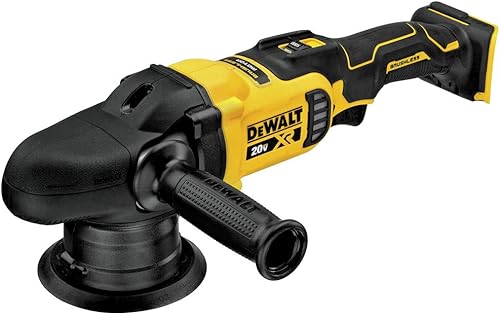
The DEWALT DCM849B leads all cordless polishers in active monthly demand at 500 purchases per month, backed by 1,932 reviews and a 4.6-star rating that reflect genuine satisfaction across a large owner base. Running on the 20V MAX battery platform at 2200 RPM and weighing 4.8 lbs, it balances portability and capability for detailers who need to move around a full vehicle without cord management. The 1.5-amp draw at 20V suggests a lighter-duty motor than full corded rotary machines, which fits maintenance polishing and light correction rather than heavy compounding. At $239.00 as a tool-only listing, buyers already in the 20V MAX ecosystem get one of the most validated cordless polishers on the market.
Best for: DEWALT 20V MAX platform users who want the most actively purchased cordless polisher available
Pros
500 monthly purchases is the highest active demand of any cordless polisher in this list
4.8 lbs is easy to manage for extended sessions and overhead panel work
1,932 reviews confirm consistent reliability across the 20V MAX platform
2200 RPM suits polishing passes and final wax application without excessive heat
Cons
Tool-only at $239.00 means a 20V MAX battery is an additional purchase
1.5-amp draw limits heavy-duty compounding capability versus corded alternatives
Bottom line: The cordless polisher buyers choose most often, with 500 monthly purchases validating its real-world value.
The Milwaukee 2738-20 runs on the M18 FUEL brushless platform at 2200 RPM and handles a 7-inch polishing pad, drawing 400 professional-grade monthly buyers from its 1,625-review, 4.6-star owner base. Weighing 120.64 ounces, it is a heavier cordless option than some rivals but the M18 FUEL brushless motor delivers consistent torque suited for professional detailing and surface prep. At $249.99 as a tool-only listing it is fairly priced for Milwaukee M18 platform users who already own batteries, and owner reviews confirm it as a capable professional polisher within the M18 ecosystem. The 7-inch pad coverage increases efficiency on large panels compared to smaller-pad alternatives.
Best for: Milwaukee M18 platform users doing professional automotive polishing or equipment surface prep
Pros
400 monthly purchases reflect strong professional adoption in the M18 FUEL ecosystem
7-inch pad coverage speeds up large panel polishing and finishing sessions
M18 FUEL brushless motor delivers consistent speed under sustained load
1,625 reviews confirm reliability for professional Milwaukee platform users
Cons
120.64 ounces is heavier than most cordless competitors in this list
Tool-only listing at $249.99 requires an M18 battery to operate
Bottom line: The professional cordless choice for Milwaukee ecosystem owners, backed by 400 monthly buyers.
The POWERTEC BF800C is a bench-mounted buffer running a 372.85-watt motor at 1750 RPM on standard 120-volt power, with a 4.6-star rating from 1,300 verified owners at $134.55. Designed as a stationary shop tool, it fills a different role than handheld polishers and serves metalworking, jewelry finishing, and parts polishing tasks where a consistent wheel-speed bench setup outperforms portable tools. The moderate 1750 RPM keeps heat manageable for brass, aluminum, and softer metals without the burning risk that comes with faster-spinning wheels. Zero recent monthly purchases reflects project-oriented buying patterns typical for bench tools rather than any quality concern.
Best for: Shop owners and hobbyists needing a dedicated bench buffer for metal parts, hardware, and jewelry finishing
Pros
372.85-watt bench motor provides steady, predictable polishing torque for shop work
1750 RPM is safe for softer metals and jewelry without burning risk
4.6 stars from 1,300 reviews confirms long-term shop utility
$134.55 is a reasonable price for a dedicated bench buffer
Cons
Stationary bench design provides no portability for field or vehicle work
0 recent monthly purchases indicates seasonal or project-driven demand patterns
Bottom line: A reliable bench buffer with strong owner satisfaction at a mid-range shop price for stationary polishing.
The 2438-20 is among the lightest polishers in this list at just 2.3 lbs, running cordless on a 12-volt platform at 2800 RPM for quick detail work and light surface finishing. Its 853 reviews and 4.6-star rating confirm that the light weight and compact form factor resonate with buyers who want a handy polisher for touch-up work rather than full panel correction. At $159.99 it is fairly priced for its class, and 100 monthly purchases show consistent ongoing demand. The 12-volt platform limits runtime and peak power compared to 18-volt or 20-volt options, so it fits best as a targeted tool for detail spots rather than as a primary polisher for large-scale correction jobs.
Best for: Detail-oriented users who want a compact, lightweight cordless polisher for targeted spot work
Pros
2.3 lbs is one of the lightest handheld polishers in this entire ranked list
2800 RPM on a compact body suits detail work and light finishing passes
853 reviews support a 4.6-star rating with consistent owner confidence
$159.99 is accessible for a compact cordless polisher with proven demand
Cons
12-volt platform limits power and runtime compared to 18V or 20V alternatives
Better suited for detail touch-up work than heavy correction on large painted surfaces
Bottom line: Ultralight at 2.3 lbs with a proven 853-review track record for compact cordless polishing.
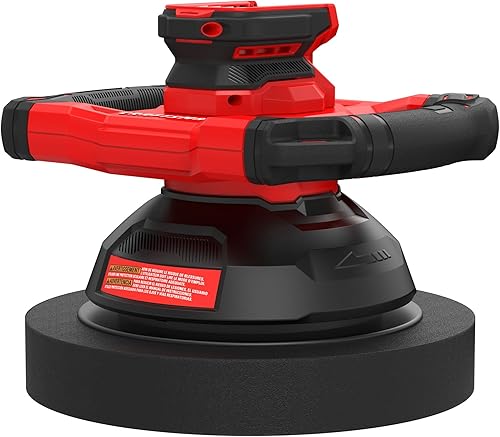
The CRAFTSMAN CMCE100B is the most affordable 20-volt cordless polisher in this list at $49.00, running at 2800 RPM on the CRAFTSMAN V20 battery platform with a 4.6-star rating from 372 owners. It is a tool-only listing, so V20 battery ownership is required, but for buyers already in the CRAFTSMAN ecosystem it delivers useful speed at an entry price no other 20-volt pick in this list can approach. The 2.81-kilogram weight is heavier than typical for a budget unit, but 100 monthly purchases confirm that buyers find it worth the price for basic detailing and finishing tasks. Fewer published technical specs than premium options are a reasonable tradeoff at this price point.
Best for: CRAFTSMAN V20 battery owners who want an affordable entry into cordless polishing
Pros
$49.00 is the lowest price for a 20-volt polisher in this list
2800 RPM handles polishing passes and light wax application effectively
100 monthly purchases confirm ongoing buyer demand for the value it provides
4.6-star rating from 372 owners reflects genuine quality at a budget price
Cons
Tool-only listing requires a CRAFTSMAN V20 battery sold separately
2.81 kilograms is heavier than expected for a compact budget polisher
Fewer published technical specifications than comparable tools at higher price tiers
Bottom line: Hard to beat at $49 for V20 platform users who already own compatible batteries.
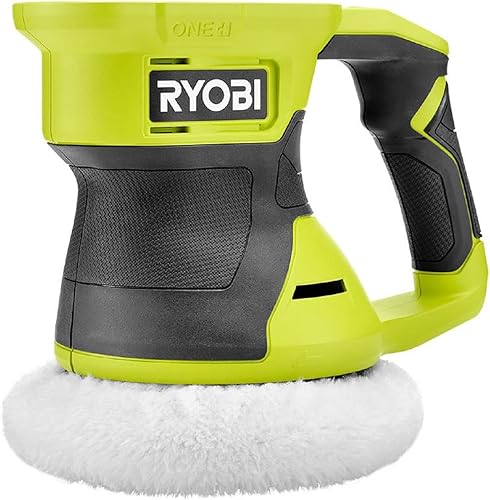
The RYOBI 5133004845 reaches 7500 RPM, the highest speed of any cordless pick in this list, and operates on the widely available RYOBI 18V ONE+ battery platform at $211.40. Its 4.6-star rating from 344 owners suggests solid performance for buyers in the RYOBI ecosystem, and the 2.2-kilogram weight keeps it manageable for finish-quality work. The 7500 RPM figure points to a high-frequency design suited for fine finishing and gloss enhancement over heavy cut correction, differentiating it from the lower-RPM cordless polishers in this list. Zero recent monthly purchases reflects a smaller active buyer pool in this price tier of the RYOBI lineup.
Best for: RYOBI 18V ONE+ platform users who need a high-speed polisher for fine finishing and gloss enhancement
Pros
7500 RPM is the highest speed listed among cordless polishers in this group
RYOBI 18V ONE+ platform offers the widest compatible battery ecosystem available
2.2 kilograms is manageable for extended finishing sessions without undue fatigue
4.6-star rating from 344 owners confirms genuine satisfaction in the RYOBI platform
Cons
0 recent monthly purchases indicates limited current buyer demand at this price tier
No amperage specification is published in the listing data
Bottom line: The highest-RPM cordless option in the list at 7500, suited for RYOBI ecosystem owners focused on finish quality.
The RYOBI PCL460B runs at 4600 RPM and weighs just 1.54 kilograms, making it the lightest battery-powered polisher in this list at $54.99. It holds a 4.6-star rating from 256 owners on the RYOBI PCL platform, positioning it as an affordable lightweight option for buyers who already own compatible batteries. The voltage is not published in the listing data, but the PCL platform designation indicates ONE+ HP compatibility. Zero recent monthly purchases and a smaller review count place it lower in demand than budget cordless options carrying more verified owner activity, but for entry-level RYOBI users the price point is difficult to beat.
Best for: RYOBI ONE+ HP battery owners wanting a lightweight, affordable cordless polisher for light detailing
Pros
1.54 kilograms is the lightest battery polisher in this ranked list
$54.99 is among the most affordable entry points for a cordless polisher with brand backing
4600 RPM suits polishing and light correction passes on automotive and household surfaces
4.6-star rating from 256 owners reflects solid initial satisfaction
Cons
Voltage not published in the listing data limits spec confidence
0 recent monthly purchases and 256 reviews provide less validation than higher-ranked picks
Fewer published technical specs than comparable cordless tools at similar prices
Bottom line: The lightest cordless polisher in the list at 1.54 kg and the most affordable RYOBI platform entry.
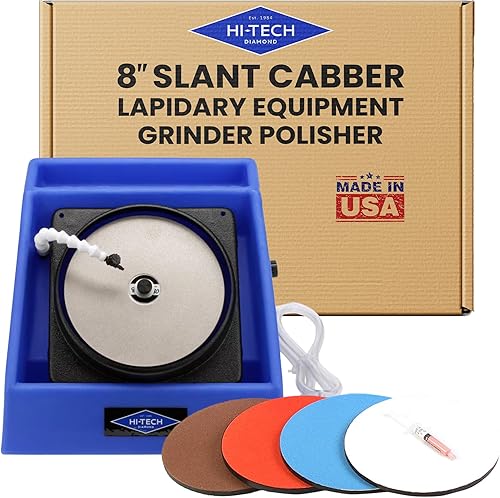
The Hi-Tech 8" Slant Cabber is a purpose-built lapidary machine designed for cutting and polishing cabochon gemstones with a slanted head geometry that no general-purpose polisher can replicate. Running a corded 115-volt motor at 3400 RPM with 1.6 amps, it weighs 15 lbs on a bench-mounted frame measuring 11 inches deep by 15 inches wide by 11 inches tall. At $699.00 it is the most expensive pick in this list, but 250 reviews in a narrow specialty niche confirm consistent utility for rockhounds, gem cutters, and lapidary hobbyists. This is a single-purpose machine that performs its specific task better than any portable polisher in the lineup could.
Best for: Lapidary hobbyists and gem cutters who need a dedicated slant-head machine for gemstone polishing
Pros
Slant-head design engineered specifically for cabochon gemstone shaping and finishing
3400 RPM corded motor at 1.6 amps provides steady controlled speed for lapidary work
250 reviews in a narrow specialty niche confirm genuine real-world performance
4.6-star rating signals strong satisfaction among a demanding specialist buyer pool
Cons
$699.00 is the highest price in this list and is justified only for lapidary applications
15-lb bench-mounted design limits use to a dedicated workstation
1.6-amp motor is far lighter than what automotive or broad metalwork polishing requires
Bottom line: An irreplaceable specialist machine for gemstone work; only relevant for lapidary buyers.
The DEWALT DCM849P2 is the kit version of the DCM849B polisher, including 20V MAX batteries at $442.48 for buyers entering the DEWALT cordless ecosystem without existing battery packs. It shares the 2200 RPM speed and 4.8-lb weight of the tool-only DCM849B, delivering the same polishing capability with the convenience of a complete ready-to-run package. Its 4.6-star rating from 212 kit buyers reflects consistent satisfaction from buyers who chose the all-in-one purchase. Zero recent monthly purchases is expected at this price tier but buyers who factor in battery cost find the kit price competitive against buying the tool and batteries separately.
Best for: New DEWALT cordless users who want a complete polisher kit with batteries included and no add-on purchases
Pros
Includes 20V MAX batteries, providing a complete and immediately usable kit
4.8 lbs stays manageable for extended polishing and finishing sessions
Same 2200 RPM performance profile as the tool-only DCM849B
4.6-star rating from 212 verified kit purchasers confirms overall quality
Cons
$442.48 is the highest investment among DEWALT cordless polishers in this list
2200 RPM tops out lower than the tool-only DCM848B at 5500 RPM
212 reviews is a smaller verified owner base than the standalone DCM849B
Bottom line: The ready-to-use DEWALT cordless polisher kit for buyers starting fresh in the 20V MAX ecosystem.
Corded vs. Cordless: Choosing by How You Actually Work
Corded polishers deliver consistent amperage for the full session, which matters on a multiple-panel correction job that might run two to three hours. The DEWALT DWP849X draws 12 amps continuously at 3500 RPM with no interruption, which is why it leads the demand charts for professional detailers. Cordless polishers like the DEWALT DCM849B (20V, 2200 RPM, 4.8 lbs) make sense when cords are a genuine obstacle, for example when polishing an entire vehicle in a driveway without a nearby outlet or moving frequently between work areas. The tradeoff is real: battery packs add weight and introduce rest breaks for charging that a corded machine never needs. Choose corded when you work in a fixed space with access to power; choose cordless when mobility is worth the runtime constraint.
Rotary vs. Orbital: Speed and Risk on Painted Surfaces
A rotary polisher spins in a fixed circle, concentrating heat and pressure at one point, which is why machines like the DEWALT DWP849X (12A, 3500 RPM) can cut through heavy oxidation quickly but can also burn clear coat if held stationary or used at full speed by an inexperienced operator. An orbital or dual-action polisher oscillates while spinning, spreading heat over a wider area, which is what makes the PORTER-CABLE 7424XP (4.5A, 3400 RPM, 5.8 lbs) forgiving for hobbyists learning paint correction. For most DIY buyers doing maintenance polishing, wax application, or light scratch removal, an orbital is the safer first tool. Rotary tools belong in experienced hands tackling deep correction work where the faster material removal rate justifies the higher skill requirement.
Motor Output and Speed: What the Numbers Actually Mean
Amperage in corded polishers measures how much current the motor draws at full load; more amps generally means more cutting power and better performance under resistance. The DEWALT DWP849X at 12 amps is near the top for handheld corded polishers, while the PORTER-CABLE 7424XP at 4.5 amps is intentionally lighter for orbital safety. Bench buffers rate motor output differently: the POWERTEC BF800C lists 372.85 watts rather than amps, which is typical for stationary bench tools where continuous duty rating matters more than peak draw. RPM tells you how fast the pad spins, not how powerful the cut is. The RYOBI 5133004845 reaches 7500 RPM on an 18-volt cordless platform, which suits high-frequency finishing and gloss enhancement, while 2200 RPM on the DEWALT DCM849B is appropriate for polishing and wax application where slower speeds prevent burning.
Weight and Session Length: Why Grams Matter Over Hours
A polisher that feels manageable for five minutes becomes a serious fatigue problem after forty-five minutes of overhead work or side-panel correction. The 2438-20 cordless polisher weighs 2.3 lbs and the Brushless XE-CS1603 weighs 1.7 lbs for targeted work, while the DEWALT DWP849X is 10.4 lbs and the XtremepowerUS 45809 reaches 22.95 lbs for industrial bench or floor polishing. Match weight to your session type: full-vehicle correction favors lighter tools even at some cost to power, while benchtop or stationary work on metal parts can handle heavier machines without operator fatigue. Among the top picks, the DEWALT DCM849B at 4.8 lbs and the Milwaukee 2738-20 at 120.64 ounces (about 7.5 lbs) represent the range of practical cordless options for sustained handheld polishing.
Battery Platform Compatibility: Buy the Ecosystem, Not Just the Tool
Three major battery platforms appear in the top picks: DEWALT 20V MAX (DCM849B at $239, DCM848B at $424.12, DCM849P2 kit at $442.48), Milwaukee M18 FUEL (2738-20 at $249.99), and CRAFTSMAN V20 (CMCE100B at $49). All three are tool-only listings except the DCM849P2 kit, so buyers without existing batteries need to factor in battery cost when comparing prices. The RYOBI 18V ONE+ ecosystem (5133004845 at $211.40, PCL460B at $54.99) is the most accessory-dense platform available and suits buyers who want the widest range of compatible tools at entry-level pricing. Buying a polisher in a platform you already own is almost always the better value decision; switching platforms to save $30 on the tool usually costs more in batteries than the savings justify.
Common mistakes to avoid
Buying a high-amp rotary polisher as a first tool: the PORTER-CABLE 7424XP orbital is the safer starting point and builds the muscle memory that prevents burning clear coat on a rotary
Comparing cordless polishers at the tool-only price without adding battery cost: the DEWALT DCM849B at $239 and CRAFTSMAN CMCE100B at $49 both require separate batteries that can add $50 to $100 to the actual purchase
Assuming higher RPM always means better performance: 7500 RPM on the RYOBI 5133004845 suits fine finishing while 2200 RPM on the DEWALT DCM849B is appropriate for polishing passes where heat buildup must be controlled
Using a bench buffer like the POWERTEC BF800C on automotive painted surfaces: wheel buffers are designed for metal parts and jewelry, not clear coat, and the contact pressure will mar paint
Ignoring weight for a full-vehicle job: the difference between a 2.3-lb compact cordless and a 10.4-lb machine like the DEWALT DWP849X is significant over a two-hour correction session on multiple panels
Buying a specialty lapidary polisher like the Hi-Tech 8" Slant Cabber for general automotive or metalwork: the slant-head geometry serves gemstone shaping only and is not a substitute for a standard handheld polisher in any other application
Frequently asked questions
What is the difference between a polisher and a buffer?
In practical use the terms overlap, but polishers typically refer to variable-speed handheld tools used for paint correction and surface finishing on vehicles or metal, while buffers often describe either bench-mounted wheel machines (like the POWERTEC BF800C) for metal parts and jewelry, or finishing passes in automotive detailing where a soft pad applies wax or glaze at lower speeds. The DEWALT DWP849X, for example, is marketed as a polisher but is commonly used for both cutting compounds and buffing out residue.
Does a 12-amp corded polisher outperform an 18-volt cordless for paint correction?
For heavy correction work, yes. The DEWALT DWP849X at 12 amps and 3500 RPM delivers sustained power through thick oxidation or deep scratches without battery fatigue. Cordless options like the Milwaukee 2738-20 (18V, 2200 RPM) are well suited for lighter correction and maintenance polishing, but they top out at lower RPM and their motor output under sustained load does not match a 12-amp corded machine. If the work involves multiple severely oxidized panels in one session, a corded polisher is the more efficient choice.
Can a cordless polisher like the DEWALT DCM849B handle a full paint correction job?
For light to moderate correction and maintenance polishing, yes. The DCM849B runs at 2200 RPM on the 20V MAX platform and is bought by 500 owners per month who clearly find it sufficient for their work. For aggressive multi-stage correction on heavily damaged paint across a full vehicle, a 12-amp corded machine completes the job faster and without battery breaks. Most owners use the DCM849B for single-stage polishing, wax application, and light defect removal rather than full professional-grade paint restoration.
What RPM should I use for wax application versus compounding?
Compounding to remove scratches or heavy oxidation typically uses higher RPM settings in the 1500 to 3500 RPM range on a rotary, where faster pad speed increases cutting action. Wax or glaze application works better at lower speeds, typically 1000 to 1500 RPM, to spread product evenly without flinging it off the pad. Variable-speed tools like the DEWALT DWP849X (which goes up to 3500 RPM) allow the operator to dial down speed for finishing passes, making a single tool usable for multiple stages of the detailing process.
Is a dual-action orbital polisher safer for beginners than a rotary?
Yes, by a significant margin. The PORTER-CABLE 7424XP orbital oscillates while spinning, spreading heat and reducing the risk of burning or marking clear coat if the pad dwells too long in one spot. A rotary polisher applies concentrated friction at a fixed point, and an inexperienced operator can burn through clear coat in seconds at full speed. Owners report consistently that the 7424XP is forgiving enough to learn on, which is why it holds 2,941 reviews and maintains a 4.6-star rating as the most reviewed orbital in this category.
Are bench buffers suitable for polishing automotive paint?
No. Bench buffers like the POWERTEC BF800C use spinning cloth or sisal wheels designed to abrade and polish metal parts, hardware, or jewelry under firm pressure. Applying that contact to automotive clear coat would damage the paint surface immediately. Automotive polishing requires a pad-and-backing-plate system that controls pressure distribution over a soft compound pad, which is how handheld polishers are designed. Keep bench buffers for their intended use on bare metal, brass, aluminum, and gemstones.
Final recommendation
The DEWALT DWP849X remains the benchmark for corded rotary polishing, backed by 6,887 reviews and 700 monthly buyers at $249.95. For cordless work, the DEWALT DCM849B leads active demand at 500 purchases per month while the Milwaukee 2738-20 draws 400 monthly professional buyers into the M18 FUEL ecosystem. The PORTER-CABLE 7424XP at $159.00 is the proven entry point for orbital detailing with nearly 3,000 reviews confirming its value. Bench work belongs to the POWERTEC BF800C, lapidary finishing to the Hi-Tech 8" Slant Cabber, and budget cordless buyers will not find a better starting price than the CRAFTSMAN CMCE100B at $49. These 13 picks cover every serious buyer scenario in the polishers and buffers category as validated by real demand and verified ratings.
We use necessary cookies to keep the site working. With your permission, we also use functional, analytics, and marketing cookies. Read our Cookie Policy.