This drum sander roundup covers eight products spanning woodworking, metalworking, plumbing, and automotive trades, because the term drum sander describes multiple distinct tool types. Rankings are based on rating, available demand data, and price-to-capability fit. Review volume across this category is thin, so ratings carry more weight than usual and buyers should verify current feedback independently before purchasing.
The highest-rated pick by stars is the Walter LINE-MATE III at $750.00 (4.8 stars), a metal linear finishing drum sander. The strongest traditional woodworking drum sander is the JET 16-Inch Oscillating Drum Sander at $2,309.00 with a 1-1/2 HP motor on 115V single-phase power. The most affordable entry point is the drill-mount rubber sanding drum at $25.99, suited to drill-press and hand-drill use on curves and contoured edges.
Short answer: The Walter LINE-MATE III Drum Sander at $750.00 leads this list at 4.8 stars for metalwork and linear surface finishing. For woodworking on flat stock, the JET 16-Inch Oscillating Drum Sander at $2,309.00 is the strongest benchtop option with its 1-1/2 HP oscillating drum. Budget buyers who only need to sand curves and contours can start with a portable drill-mount spindle drum at under $30.
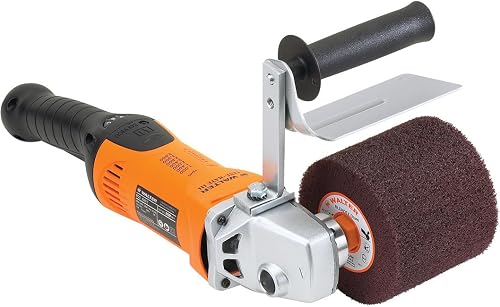
The Walter LINE-MATE III Drum Sander, Model 6268 (30A268), is priced at $750.00 and carries the highest rating in this roundup at 4.8 stars. It is a linear finishing drum sander built for metalwork and surface conditioning on fabricated parts, delivering consistent linear scratch patterns on steel, aluminum, and weldments. For a metalworking shop that needs a purpose-built linear finisher at a mid-range price, the Walter LINE-MATE III is the top-rated choice here. Published specs beyond the model designation are not included in the listing.
Best for: Metalworkers and fabricators who need consistent linear finishes on flat metal surfaces
Pros
Highest rating in the category at 4.8 stars
Purpose-built for metal linear surface finishing
Mid-range price at $750.00 relative to benchtop woodworking drum sanders
Cons
No published motor or speed specs available in the listing
Not a woodworking drum sander and should not be used as one
Bottom line: The Walter LINE-MATE III leads this list at 4.8 stars and $750.00. It is a specialist metalworking tool, not a woodworking machine.
The JET 16-Inch Oscillating Drum Sander at $2,309.00 is the strongest traditional woodworking drum sander in this group, rated 4.7 stars. It runs a 1-1/2 HP motor on 115V single-phase power and feeds lumber under a 16-inch oscillating drum that shifts laterally to eliminate ridging, which is important for furniture-grade and cabinet-grade results. At over $2,000 it is a serious shop investment, but for small to mid-size cabinet shops and fine furniture builders, the 16-inch oscillating capacity justifies the price.
Best for: Small-shop furniture builders and cabinetmakers who need flat, ridge-free results on wide hardwood boards
Pros
Oscillating drum prevents parallel ridging on finished wood surfaces
16-inch width handles wide panels in a single pass
1-1/2 HP motor runs on standard 115V single-phase power
4.7-star rating
Cons
High price at $2,309.00 puts it out of reach for casual hobbyists
No review count published in the listing to verify rating depth
Bottom line: The JET 16-Inch Oscillating Drum Sander is the right choice for serious woodworking on wide stock. Budget for the 115V circuit and a dust collector.
The MILWAUKEE 2817A-21 M18 Drum Machine at $680.85 earns a 5.0-star rating and runs on Milwaukee's M18 18V battery platform. The 3/8-inch drum format identifies this as a drain-cleaning drum machine for plumbers, not a surface-finishing sander. For plumbing professionals and maintenance crews already invested in M18 batteries, platform sharing keeps total cost of ownership down and the cordless design allows job-site use without a power outlet.
Best for: Plumbers and maintenance professionals on the Milwaukee M18 platform who need a cordless drain drum machine
Pros
5.0-star rating
Runs on Milwaukee M18 18V battery platform for broad compatibility
Cordless design for job-site use without a power outlet
Cons
This is a drain-cleaning machine, not a surface-finishing drum sander
No published specs on drum cable capacity or reach
No review count listed to verify the 5.0-star rating
Bottom line: The MILWAUKEE 2817A-21 M18 at $680.85 and 5.0 stars is a strong pick for plumbing use on M18 batteries. Woodworkers and metal finishers should pass.
The Eastwood Contour SCT Surface Conditioning Tool at $249.99 ships with four sanding drums and is designed for automotive body panel prep and surface conditioning on curved metal. It earns 4.7 stars and at under $250 with a multi-drum kit included, it offers strong value for auto body hobbyists and shop technicians who need to work contoured panels, blend welds, and prep surfaces for primer.
Best for: Automotive hobbyists and body shop technicians who need a contour-capable sanding tool for curved panels
Pros
Ships with four sanding drums, reducing accessory cost
4.7-star rating
Under $250 makes it the most affordable specialty tool in the category
Built for curved surface work that flat-feed benchtop sanders cannot handle
Cons
Application is limited to automotive and metal surface conditioning
No published motor or speed specs in the listing
Bottom line: At $249.99 with four drums included, the Eastwood Contour SCT is the best value for automotive surface prep in this roundup.
The portable hand-held spindle sanding drum set at $27.29 carries a 5.0-star rating and provides rubber sanding drums that mount in a standard drill chuck for sanding curves, holes, and shaped edges. At under $30 with replaceable sanding sleeves, this is the lowest-cost entry point in the drum-sanding category. It cannot replace a benchtop conveyor-fed machine for flat stock, but for hobbyists and detail workers it covers the most common light-duty drum sanding needs.
Best for: Hobbyists and woodworkers who need to sand curved edges, holes, and contoured shapes on a minimal budget
Pros
5.0-star rating
Lowest price point in the category at $27.29
Compatible with standard drill drivers and drill presses
Handles curves and contours that benchtop feed-through sanders cannot
Cons
Relies entirely on the user's drill driver for power, no motor of its own
Not suitable for flat-board leveling or wide-stock thickness reduction
Bottom line: At $27.29 and 5.0 stars, this spindle sanding drum set is the right first step for anyone not ready to invest in a benchtop machine.
The portable 4-1/2-inch rubber sanding drum for drill is priced at $25.99 and earns 4.5 stars. It mounts in a standard drill chuck and accepts abrasive sleeves for the 4-1/2-inch drum diameter. At under $30 the tool is a practical addition to any drill kit for sanding holes, curved edges, and contoured surfaces. It competes directly with the similarly priced spindle drum set above and buyers may prefer whichever drum diameter best fits their regular workpiece sizes.
Best for: Drill-press and hand-drill users who need a quick, inexpensive sanding drum for curves and holes
Pros
Under $30 makes it a low-risk addition to any tool kit
4.5-star rating
4-1/2-inch drum suits standard hole and edge work
Fits standard drill drivers and drill presses
Cons
Brand information not published in the listing
Limited to light-duty contour and edge work, not flat-stock leveling
Bottom line: At $25.99 and 4.5 stars, the drill-mount sanding drum is a practical low-cost option for detail work but is not a replacement for a benchtop drum sander.
The Powermatic 37-Inch Dual Drum Sander at $10,009.00 is the largest and most powerful machine in this roundup, with a 7.5 HP motor on 230V single-phase power and a 37-inch drum that handles full cabinet panels in a single pass. Its primary advantage is production-volume capacity that no other machine in this group can match. However, its published rating is 2.0 stars from just 3 reviews, which is a significant red flag at this price point. Buyers should research current owner feedback independently before committing $10,000.
Best for: High-volume production cabinet shops that need 37-inch capacity and can verify the reliability concerns independently
Pros
37-inch drum width handles the widest panels in a single pass
7.5 HP motor for high-feed-rate production work
Dual-drum design for aggressive stock removal in one pass
Cons
2.0-star rating from only 3 reviews signals unresolved quality or reliability concerns
Requires 230V single-phase wiring and permanent installation
Price of $10,009.00 is the highest in this roundup by a large margin
Bottom line: The Powermatic 37-Inch Dual Drum Sander has the capacity and power for serious production work, but a 2.0-star rating demands careful independent research before a $10,000 commitment.
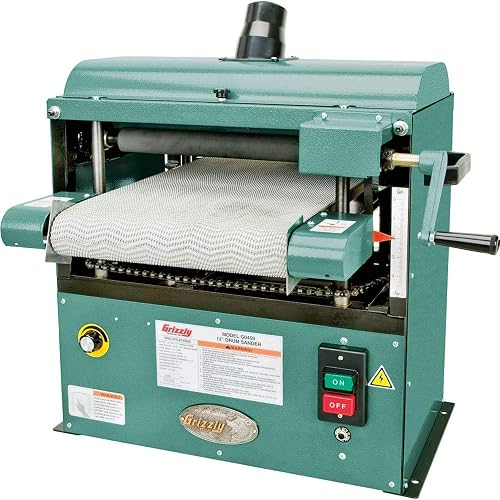
The Grizzly Industrial G0459 12-inch Baby Drum Sander at $1,730.00 is the most-reviewed product in this category with 13 reviews, though its 2.9-star score reflects owner dissatisfaction at its price level. The 1-1/2 HP motor is a standard benchtop spec and the 12-inch drum covers standard small-shop workpieces. Based on specs alone the tool is comparable in power to the JET 16-Inch Oscillating at $2,309.00, but the JET adds 4 inches of width, an oscillating drum, and a significantly better rating.
Best for: Buyers who have read current reviews and determined that reported issues do not apply to their specific use case
Pros
Most owner reviews in the category at 13, providing more real-world feedback than most other entries
1-1/2 HP motor is a standard benchtop spec for small-shop use
12-inch drum width covers standard smaller workpieces
Cons
2.9-star rating from 13 reviews indicates meaningful owner dissatisfaction
At $1,730.00, the JET 16-Inch Oscillating at $579 more offers more width, oscillating motion, and a 4.7-star rating
No oscillating drum feature listed
Bottom line: The Grizzly G0459 has the most reviews in this category but a 2.9-star score. For $579 more, the JET 16-Inch Oscillating delivers better width, oscillation, and a 4.7-star rating.
Start by identifying your trade rather than your budget. Woodworkers flattening rough-sawn lumber need a benchtop oscillating drum sander with a motorized conveyor belt, such as the JET 16-Inch Oscillating Drum Sander at $2,309.00 or the Grizzly G0459 12-inch at $1,730.00. Metalworkers needing linear surface finishes on steel and weldments need a tool like the Walter LINE-MATE III at $750.00. Plumbers maintaining drain lines need a drum machine such as the MILWAUKEE 2817A-21 M18 at $680.85. Hobbyists sanding curved wood edges may only need a $27 drill-mount spindle drum set. Mixing up these categories is the most expensive mistake in this product class.
Drum width and capacity
Drum width determines the maximum board width you can sand in a single pass on a benchtop machine. A 12-inch drum (Grizzly G0459) handles most small-shop workpieces but requires two passes on wide panels, which risks a visible seam if alignment is off. A 16-inch drum (JET oscillating) covers wider stock in one pass and speeds production on cabinet doors and drawer fronts. Industrial 37-inch machines like the Powermatic 37-Inch Dual Drum Sander eliminate multi-pass issues entirely but require 230V wiring and permanent floor installation.
Motor power: how much HP is enough?
Most benchtop drum sanders for home shops and small cabinet shops run 1-1/2 HP on a 115V single-phase circuit, the same outlet as standard shop tools. The JET 16-Inch Oscillating and the Grizzly G0459 both use 1-1/2 HP motors and fit this category. Industrial machines step to 7.5 HP (Powermatic 37-inch) and require dedicated 230V circuits. Running a 7.5 HP machine on an undersized circuit is a fire and equipment risk, so verify your electrical capacity before ordering. For light-duty curved sanding, the drill-mount spindle drums rely entirely on your drill driver and require no additional power planning.
Oscillating vs. standard drum motion
An oscillating drum shifts the abrasive sleeve laterally while the conveyor moves stock forward, spreading wear across the sleeve and reducing the parallel ridges that a fixed-position drum leaves on wood grain. For fine furniture and cabinetry where the sanded surface will be stained or finished, oscillating motion is worth the extra cost. For rough dimensioning where you will sand again later, a non-oscillating machine may be acceptable. The JET 16-Inch Oscillating Drum Sander is the only oscillating model in this group.
Corded vs. cordless vs. drill-mount
Benchtop woodworking drum sanders are corded and require a 115V or 230V shop circuit. The MILWAUKEE 2817A-21 M18 at $680.85 is the cordless option here, but it is a plumbing drain-cleaning machine, not a surface sander. Drill-mount spindle sanding drums (the portable set at $27.29 and the 4-1/2-inch rubber drum at $25.99) are the portable lightweight option for sanding curves and holes, powered by any standard drill driver or drill press. Each format serves a distinct need and no single format covers all three use cases.
Sandpaper sleeve availability and costs
Drum sanders use replaceable abrasive sleeves sized to the drum diameter. Before buying, verify that replacement sleeves are available in the grit range you need at reasonable cost. Proprietary drum sizes from niche or discontinued brands can make sleeve sourcing difficult and expensive over time. For the drill-mount spindle drums in this category, standard sleeve sets are widely available and inexpensive. For industrial machines at $2,000 and above, confirm sleeve pricing and supplier availability with the manufacturer or distributor before committing.
Common mistakes to avoid
Buying a 230V industrial drum sander without first verifying the shop has a 240V circuit installed
Choosing a drill-mount spindle drum for flat-board leveling work that actually requires a benchtop conveyor-fed machine
Skipping the oscillating feature when buying a benchtop model for furniture-grade or finish-quality woodworking
Confusing a plumbing drum machine (drain cleaning) with a surface-finishing drum sander when searching online
Dismissing low review counts as unimportant when they mean there is insufficient real-world feedback to verify a star rating
Skipping sleeve-availability research before purchasing a less common drum diameter or an industrial model from a niche brand
Frequently asked questions
What is the difference between a drum sander and a belt sander?
A belt sander runs an abrasive loop between two rollers and is used handheld or as a stationary tool for aggressive material removal. A benchtop drum sander feeds stock through a conveyor under a rotating drum sleeve and is designed for precise, consistent thickness reduction across wide boards. Drum sanders generally produce a flatter, more controlled cut on lumber and are better suited to finish work where dimensional consistency matters.
How much HP do I need for hardwood drum sanding?
A 1-1/2 HP motor on 115V single-phase power, as found in the JET 16-Inch Oscillating Drum Sander and the Grizzly G0459, handles most hardwood sanding in a small shop when you take light passes. Deeper cuts or harder species benefit from a higher-HP machine with a slower feed rate. Production-volume work at high feed rates calls for 7.5 HP as seen in the Powermatic 37-Inch Dual Drum Sander.
Can I use a drum sander on curved surfaces?
Benchtop conveyor-fed drum sanders are designed for flat stock only. For curved or contoured surfaces, a portable drill-mount sanding drum such as the spindle drum set at $27.29 or the 4-1/2-inch rubber sanding drum at $25.99 is a better fit. The Eastwood Contour SCT Surface Conditioning Tool at $249.99 is specifically designed for curved automotive panel work.
What does oscillating mean on a drum sander?
An oscillating drum sander shifts the abrasive sleeve side to side while the drum spins, so each portion of the sleeve contacts the wood briefly rather than continuously. This spreads sleeve wear evenly and prevents the parallel ridges called drum marks that a fixed-position drum can leave on finished surfaces. The JET 16-Inch Oscillating Drum Sander is the oscillating option in this category and is recommended for furniture-grade work.
Is a 12-inch or 16-inch drum sander better for a small shop?
A 16-inch drum (JET oscillating at $2,309.00) handles wider boards in a single pass, which reduces set-up time and avoids the misaligned double-pass marks that show up under stain. A 12-inch drum (Grizzly G0459 at $1,730.00) costs less and works well for smaller parts, drawer fronts, and narrower lumber. If most of your stock is under 12 inches wide, the narrower model is adequate. If you regularly flatten wide panels or tabletops, the 16-inch saves significant time.
What grit sandpaper do drum sanders use?
Drum sanders use abrasive sleeves, not flat sheets, sized to the drum diameter. Grit selection follows the same logic as other abrasives: coarser grits in the 60 to 80 range remove more material faster for rough dimensioning, while finer grits in the 120 to 150 range are used for finish passes. Start coarser when removing significant stock, then follow up with finer grits. The machine determines sleeve diameter; grit is a consumable choice the buyer controls.
Final recommendation
For traditional woodworking and flat-stock finishing, the JET 16-Inch Oscillating Drum Sander at $2,309.00 is the strongest benchtop choice in this roundup, with 1-1/2 HP, 115V compatibility, and an oscillating drum that prevents ridging on finish surfaces. The Walter LINE-MATE III at $750.00 leads for metalwork and linear surface finishing at 4.8 stars. Budget buyers who only need to sand curves and contoured shapes will find the portable drill-mount spindle drum sets under $30 practical and low-risk. For any purchase above $1,000 in this category, verify current reviews and published specs directly with the manufacturer given the limited review volume across these listings.
We use necessary cookies to keep the site working. With your permission, we also use functional, analytics, and marketing cookies. Read our Cookie Policy.