How to Choose a Circular Saw
Recommended picks


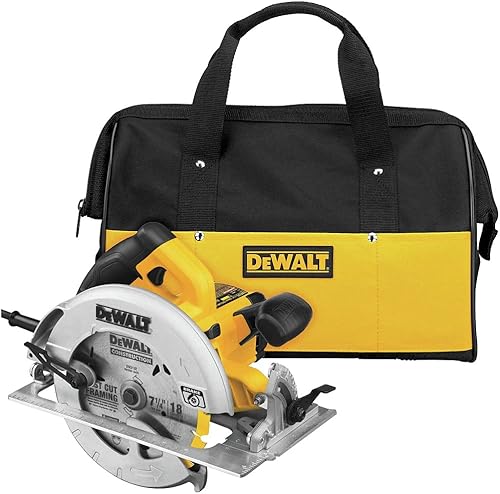
Blade Size Sets Your Maximum Cut Depth
Everything a circular saw can and cannot do flows from its blade diameter. A 7-1/4-inch blade gives roughly 2-3/8 inches of cut depth at 90 degrees, clearing a standard 2x4 laid flat and a full sheet of 3/4-inch plywood in a single pass. Compact 5-1/2-inch saws trim that depth to around 1-7/8 inches, which works for sheathing, trim, and thin panels but falls short on doubled-up framing members. Larger 8-1/4-inch models push depth past 3 inches for contractors who stack-cut or work with LVL beams. The capacity figure in product listings refers to the blade's cut reach, so read it carefully: a saw listed at 8-inch capacity is not the same tool as one with a 4-inch depth-of-cut capacity. When the listed capacity value seems unusually small, confirm it against the full product description before buying.
Corded vs Cordless: Power Source Matches the Work
Corded circular saws draw uninterrupted power from the wall, so their blade speed stays consistent from the first cut to the last, which matters most during full-day ripping sessions or stationary shop work. Among the saws reviewed in this section, corded electric models running on 120 volts reach blade speeds of 5800 RPM and motor outputs of 1800 watts, the kind of sustained performance a cord enables. The tradeoff is the cord itself: you are tethered to an outlet or extension reel, and you manage slack on every pass. Cordless 20-volt battery-powered saws have become the default on active job sites for good reason. Based on specs and verified owner reviews, battery-powered models at 20 volts run at speeds like 3000 RPM and tip the scale at roughly 2.41 kilograms, light enough to carry one-handed between floors. If your work is in a fixed shop with power at hand, a corded saw is the more economical choice. If you frame, remodel, or work away from outlets, a 20-volt cordless saw on an established battery platform speeds up your workflow because there is no cord to manage and no outlet to locate.
Motor Power and Blade Speed: How Much Do You Actually Need
RPM and watt ratings together tell you how fast and how hard the blade can work. Higher RPM means a cleaner finish cut in hardwood and a lower chance of the blade bogging down mid-kerf; lower RPM with higher torque handles thick, wet, or knotty lumber. Corded saws in this category post blade speeds of 4500 to 5800 RPM. Cordless models at 20 volts typically run 2800 to 3000 RPM, which is adequate for all standard framing and woodworking tasks. Motor power varies dramatically across the lineup. A battery-powered 20-volt saw like the DEWALT DCS334B, priced at $132 with a 4.8-star rating across 9,477 verified reviews and purchased by roughly 3,000 owners per month, lists a motor output of 2000 watts and weighs just 4.2 pounds. On the corded side, a tool like the DEWALT DWS715 at $299 delivers 1800 watts at 4500 RPM but weighs 42.8 pounds, reflecting its role as a station tool rather than a pack-and-go saw. The lesson: motor wattage alone does not tell you portability. Cross-reference weight and power source together.
Bevel Capacity: Matching the Saw to Your Cut Angles
Bevel capacity is how far the shoe tilts to produce angled cuts. Standard saws bevel to 45 degrees on one side, covering roofing, decking fascia, and most trim joints. Better models include a positive detent at 22.5 degrees so compound angles snap into place without guesswork. Some premium tools bevel past 50 degrees for unusual compound angles on finish work. The bevel lock is just as important as the range: a loose lock that slips under blade vibration will produce cuts that are slightly off-angle, which compounds into visible gaps on mitered trim. When reading a listing, check for a stated bevel range, the presence of positive stops, and whether the scale is etched or printed. Printed scales on stamped shoes wear and fade; etched or scribed scales on cast aluminum shoes stay readable. If a listing omits the bevel spec entirely, assume a single-direction 45-degree bevel with no detent.
Shoe Plate Construction: The Foundation of Accurate Cuts
The shoe is the flat base that rides against your workpiece on every pass, and its rigidity directly determines cut accuracy. Aluminum extruded shoes hold their flatness under hard use and resist bending if the saw takes a drop. Stamped steel shoes reduce cost but can flex or develop a twist that causes the saw to drift on long rips. Magnesium shoes, found at higher price points, reduce weight without sacrificing stiffness. Blade guard clearance at the shoe's front edge matters when you need to start a cut close to a fence or layout line. A left-side blade position (common on sidewinder saws) lets right-handed users see the blade line clearly, while worm-drive designs and some cordless saws place the blade on the right. Neither is strictly better, but right-handers tend to prefer left-blade models for visibility. The material listed in product specs as High Speed Steel, Carbon Steel, or Alloy Steel refers to the blade material, not the shoe, so check full product descriptions for shoe construction details.
Weight and Ergonomics Over a Full Work Day
A circular saw you carry and use for four to six hours must be comfortable in practice, not just light on a spec sheet. Battery-powered 20-volt saws in this section weigh from 4.2 to 5.6 pounds depending on motor size and blade configuration. The DEWALT DCS331B, for example, lists at 5.6 pounds and runs on a 20-volt battery at 3000 RPM; owners have posted 7,970 reviews at 4.8 stars, which reflects a broad base of real job-site use. Corded saws that reach 1800 watts routinely hit 40 to 54 pounds because they are cart-mounted or bench tools. For genuine portability, stay under 7 pounds including battery. Handle design splits between D-handle (conventional grip, best for standard horizontal crosscuts) and barrel-grip (inline with the blade, preferred for plunge cuts and overhead work). Grip choice is personal, but barrel-grip saws demand a stronger wrist on overhead cuts because there is no secondary handle to stabilize the tool.
Safety Features You Should Confirm Before Buying
A lower blade guard is the first line of defense on every circular saw. It springs open as the shoe moves forward and closes automatically when you lift the saw, so the blade is never exposed while the tool is at rest. Confirm the guard lever is accessible without repositioning your cutting grip. An electric brake stops the blade within two seconds of releasing the trigger, compared to 10 or more seconds of coast-down on saws that omit it. This feature matters most in tight spaces, on scaffolding, and when you need to set the saw down quickly. At $149 with 4.8 stars and 5,100 verified owner reviews, the DEWALT DWE575SB is one of the more consistently purchased options in this section, and its review volume indicates broad, sustained owner use. Dust blowers that clear the kerf line improve cut accuracy as much as safety by keeping your layout mark visible. Riving knives and kerf splitters, thin wedges that trail the blade in the cut, prevent the workpiece from closing on the blade on long rips, which is the most common cause of kickback.
Common mistakes to avoid
- Choosing blade size based on price alone rather than the actual cut depth required for your material thickness
- Buying a cordless saw on an unfamiliar battery platform when you already own tools on a different voltage system
- Ignoring the listed item weight when shopping online: a saw that feels manageable for 30 seconds in a store is exhausting after four hours on a job site
- Setting the blade depth all the way down so the full blade is exposed below the workpiece, rather than just 1/4 inch past the bottom face, which increases kickback risk and reduces cut quality
- Skipping a straight-edge guide or rip fence and then attributing drift to the saw rather than the cutting technique
- Not confirming whether an electric brake is included: some budget listings omit it or offer it as a separate purchase, and the absence is not always stated clearly
Frequently asked questions
What blade size is right for a first circular saw?
A 7-1/4-inch saw is the standard starting point because it handles the widest range of tasks: framing lumber, plywood, OSB, and decking all fall within its cut capacity. Compact 5-1/2-inch saws save a pound or two of weight but limit what you can cut in a single pass, which becomes frustrating once you move beyond trim and light finish work.
Can I cut plywood cleanly with a circular saw?
Yes. The key is blade tooth count and cut direction. A higher-tooth finish blade produces a cleaner edge than a framing blade. You also want to cut with the good face of the panel facing down on a sidewinder saw, since the blade cuts on the upstroke and tears are on the top face. Supporting the panel on both sides of the cut prevents the off-cut from pinching the blade as it falls.
How do I reduce kickback risk on a circular saw?
Set blade depth to no more than 1/4 inch below the workpiece bottom. Keep the blade guard functional and never remove it for convenience. Use a riving knife or kerf splitter on long rips so the cut does not close on the blade. Stand to the side of the cut line rather than directly behind the saw, and let the blade reach full speed before entering the workpiece.
Is a 20-volt cordless circular saw powerful enough for framing?
Based on the specs and verified owner review counts for 20-volt models in this category, yes. Battery-powered 20-volt saws run at motor outputs that handle standard framing lumber, engineered OSB, and treated decking without stalling. The practical limit is runtime per charge: full-day framing crews typically rotate two or three batteries. For occasional or medium-volume framing, a single 4Ah or 5Ah pack covers most work sessions.
What RPM should I look for in a circular saw?
Corded 7-1/4-inch saws commonly run 5000 to 5800 RPM, which produces smooth crosscuts and handles hardwood well. Cordless 20-volt models typically run 2800 to 3000 RPM, which is sufficient for all standard framing and woodworking. Lower RPM with higher torque matters more when cutting thick or wet lumber; higher RPM matters more for clean finish cuts in hardwood or melamine.
Does a heavier circular saw cut better than a lighter one?
Not automatically. Weight reflects motor size and housing material, but the quality of the shoe plate, blade alignment, and guard design matter more for cut accuracy. A heavy saw can actually be harder to control on overhead or freehand cuts. Match weight to how you will use the tool: a stationary or cart-mounted setup tolerates heavier corded models fine, while site work where you carry and reposition the saw constantly benefits from keeping the tool under 7 pounds.