Angle Grinder Disc Guide: How to Choose the Right Disc for Every Job
Recommended picks


The Main Disc Types and What Each One Does
Angle grinders accept a wide family of discs, and each is engineered for a specific task. Cutting discs (also called cut-off wheels) are thin, typically 1/16-inch to 1/8-inch thick, and are designed to slice through metal, pipe, rebar, or masonry in a straight line. Grinding discs are thicker, usually 1/4-inch, with a depressed-center shape that lets you work at a lower angle to the surface for aggressive stock removal, weld grinding, or deburring. Flap discs stack overlapping abrasive flaps over a fiberglass or plastic backing plate, and they do double duty: they grind and finish in one pass, leaving a smoother surface than a standard grinding disc. Wire wheels and wire cup brushes use carbon steel or stainless steel wire bristles to strip rust, mill scale, paint, and corrosion from metal surfaces without removing base metal. Finally, polishing and surface-conditioning discs (non-woven abrasive pads) blend scratches and prep metal for coating. Knowing which category you need before you buy prevents wasted money on the wrong consumable and, more importantly, prevents dangerous misuse.
Matching Disc Diameter to Your Grinder
Disc diameter must match the guard and spindle configuration of your specific grinder. The most common sizes in the market are 4.5-inch and 5-inch for compact grinders, and 6-inch or 7-inch for larger models. The DEWALT DWE402, a corded grinder rated at 11000 RPM and 1320 watts, is sized for standard 4.5-inch accessory discs, while a heavier corded unit like the Makita GA7021, rated at 6000 RPM and 1800 watts with a 15.4-pound frame, is built around larger 7-inch discs that cover more surface area per pass. Never mount a disc larger than the grinder's rated capacity, even if it physically fits over the spindle thread. Oversized discs put stress on the spindle bearing, can contact the guard, and spin at a peripheral speed the disc was not engineered to handle. The disc package label always states the maximum diameter; match it exactly.
RPM Ratings: The Safety Rule You Cannot Skip
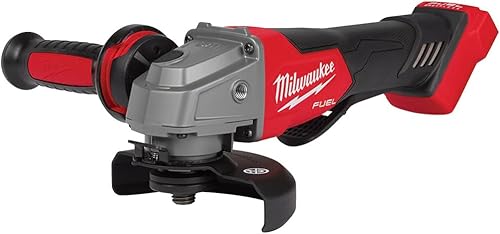
Every disc carries a maximum RPM marking on its label or blotter paper center. This number must be equal to or higher than your grinder's no-load RPM. Running a disc above its rated speed causes the abrasive bond to fail, which can result in disc fragmentation and serious injury. The DEWALT DWE402 spins at 11000 RPM and the Makita 9557PBX1 also runs at 11000 RPM, so discs used on either must be rated for at least 11000 RPM. The Milwaukee 2880-20, a battery-powered 18-volt grinder rated at 8500 RPM, gives you slightly more flexibility in disc selection since more discs qualify at that speed, but the rule still applies. Battery-powered models like the DEWALT DCG413B, rated at 3450 RPM, pair with discs rated at or above that figure, and most standard grinding and cutting discs comfortably exceed it. Check the RPM before you buy discs, not after. If a disc does not have an RPM rating printed on it, treat it as unrated and do not use it.
Abrasive Grain Material and When It Matters
The abrasive grain bonded into a grinding or flap disc determines its cut rate, heat generation, and service life. Aluminum oxide is the standard grain for ferrous metals (steel, iron) and is the most affordable option. Zirconia alumina cuts faster and runs cooler than aluminum oxide, making it the preferred choice for stainless steel, hard alloys, and heavy stock removal where heat would otherwise discolor the workpiece. Ceramic alumina is the premium option and self-sharpens as it wears, which translates to longer disc life and consistent cut rate on demanding applications like weld grinding on thick plate. Silicon carbide discs are designed for non-ferrous materials, stone, masonry, and tile, and they should not be used on steel because they load quickly and lose effectiveness fast. When working on stainless steel, using an aluminum-oxide disc rated for ferrous metals can introduce carbon contamination that eventually causes rust spots; a zirconia or ceramic disc avoids this. The grain label is printed on the disc blotter or stated in the product description; choosing the right grain is not about brand preference, it is about chemistry.
Cutting Discs vs. Grinding Discs: How They Behave Differently
These two disc types look similar at a glance but behave very differently under load, and confusing them causes accidents. Cutting discs are designed to be used perpendicular to the workpiece, with only the disc edge contacting the cut line. They are thin enough to slice cleanly but brittle in the radial direction, meaning lateral pressure or twisting during a cut can crack the disc suddenly. Grinding discs are used at a low angle, typically 15 to 30 degrees off the surface, with the disc face contacting the material. They are far thicker and can handle lateral forces and side pressure. Using a cutting disc for grinding will quickly destroy the disc and risks shattering. Using a grinding disc for cut-off work is possible in some limited situations but leaves a wide kerf, overheats the material, and is inefficient. Owners of high-output corded grinders like the DEWALT DWE402 at 1320 watts particularly need to respect this distinction, as the motor power available can push a cutting disc far past its safe lateral load if technique is sloppy.
Wire Wheels, Flap Discs, and Specialty Prep Discs
Wire wheels and cup brushes are consumables with their own safety considerations. Knotted wire wheels, where the wires are twisted into tight bundles, are more aggressive and hold up better on heavy rust and thick paint. Crimped wire wheels use individual straight wires and are gentler, suited to lighter prep work on thinner materials. Both types shed individual wire filaments during use, so eye protection rated for grinder work (not just safety glasses) is mandatory. Wire accessories are rated by RPM just like abrasive discs, and many knotted cup brushes have a maximum RPM well below the free-speed of a high-RPM corded grinder, so check before mounting. Flap discs, by contrast, are among the most forgiving disc types for new users because the overlapping abrasive flaps cushion the cut and do not catch aggressively on edges. A Type 27 flap disc (flat profile) is used on flat surfaces, while a Type 29 (angled or conical profile) is more aggressive and better for weld blending where you want to concentrate abrasive action. Grinders like the Milwaukee 2880-20 at 8500 RPM and 800 watts pair well with flap discs for surface finishing tasks where a controlled, moderate material removal rate is the goal.
When to Replace a Disc
A disc does not have a fixed lifespan measured in hours, but there are clear signals that it is time to stop and swap. Any visible crack, chip out of the edge, warped shape, or delamination of the abrasive layer is an immediate discard. Cutting discs that have worn down past their wear indicator line, or to the point where the diameter is noticeably reduced, lose their RPM safety margin because a smaller disc spins faster at the same motor RPM. A disc that glazes over and stops cutting efficiently has loaded up with swarf or bonded material, and forcing harder rather than replacing it risks overheating and sudden failure. Grinding discs should be retired before they wear down to the point where the disc nut (flange) would contact the workpiece. Store discs flat in a dry location away from moisture, solvents, and sharp impacts; a disc that has absorbed moisture or been dropped hard on concrete can fail without warning even if it looks undamaged.
Common mistakes to avoid
- Using a cutting disc for side grinding: thin cut-off wheels are not built for radial pressure and can shatter when used at a low grinding angle.
- Ignoring the max RPM label on the disc: a disc rated below your grinder's no-load speed can fail at full throttle regardless of how briefly you run it.
- Mounting a disc larger than the grinder's rated size: it may thread on but the peripheral speed and guard clearance will be outside the disc's design limits.
- Using a ferrous-rated aluminum oxide disc on stainless steel: the carbon contamination it leaves behind causes surface rust and can void weld certifications.
- Skipping the ring test on new vitrified grinding wheels: tap the disc lightly with a wooden handle; a dead thud rather than a clear ring means the disc is cracked and must not be used.
- Storing discs in areas with moisture, solvent fumes, or temperature extremes: resin-bonded abrasives degrade even when unused, and a degraded bond fails at speed.
Frequently asked questions
Can I use any angle grinder disc on any angle grinder?
No. Two rules apply. First, the disc diameter must match the grinder's rated size and guard. Second, the disc's maximum RPM rating must equal or exceed the grinder's no-load RPM. For example, the DEWALT DWE402 runs at 11000 RPM, so every disc you mount on it must be rated for at least 11000 RPM. Discs that pass both checks are safe to use; discs that fail either check are not.
What is the difference between a Type 27 and a Type 29 flap disc?
Type 27 flap discs have a flat profile and are best for flat surfaces and general blending. Type 29 flap discs have an angled or conical profile that concentrates abrasive pressure and makes them more aggressive, which is useful for weld grinding, edge work, and contoured surfaces. Type 29 removes material faster but leaves a slightly rougher finish.
Do cordless grinders need special discs compared to corded models?
The disc type, material, and RPM rating requirements are the same for both. The practical difference is that cordless grinders like the DEWALT DCG413B (20V, 3450 RPM) and the Milwaukee 2880-20 (18V, 8500 RPM) have different no-load RPMs, so you must check the disc's rated speed against each model's specs. Battery-powered grinders also benefit from discs with faster cut rates since sustained sessions on a single charge favor efficiency over slow grinding passes.
How do I know which abrasive grain to choose for my metal type?
For mild steel and iron, aluminum oxide is the standard choice and the most economical. For stainless steel or hard alloys where heat and contamination are concerns, choose zirconia alumina or ceramic alumina discs. For masonry, stone, and tile, silicon carbide is correct. Using the wrong grain on the wrong material degrades the disc faster and in the case of stainless steel can cause corrosion problems on the finished surface.
How do I tell if an angle grinder disc needs to be replaced?
Discard any disc that has a visible crack, chip, notch out of the edge, or warped shape. Replace cutting discs when they have worn down noticeably in diameter, because a smaller disc spins faster at the same motor RPM and may exceed the disc's rated speed. Replace grinding and flap discs when abrasive performance drops significantly and extra pressure is needed to maintain cut rate. Never attempt to repair or re-use a disc that shows structural damage.
Can I use a wire cup brush rated for 6000 RPM on a grinder that runs at 11000 RPM?
No. A wire accessory rated at 6000 RPM must not be run on a grinder that spins at 11000 RPM. At that overspeed the wire fastening can fail, releasing bristles at high velocity. Check the wire accessory RPM rating printed on the brush hub before mounting it on any grinder, and select a grinder model whose no-load RPM stays within that limit.