Impact Driver vs Impact Wrench: Which Tool Do You Need?
Recommended picks

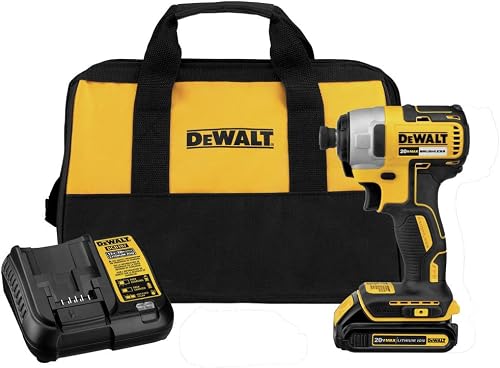

How the Mechanisms Differ
Both tools use a rotary impact mechanism, but they apply force in fundamentally different ways. An impact driver combines rotation with rapid concussive blows along the drive axis, making it highly effective at seating screws without stripping heads. The hammering action kicks in under resistance, so the tool spins freely until it meets load, then delivers short, sharp rotational impacts. An impact wrench uses a similar principle but scales the internal hammer mechanism up considerably to produce much higher torque for loosening and tightening threaded fasteners such as nuts and bolts. The DEWALT DCF900P1, a 20-volt battery-powered impact wrench weighing 11 pounds, illustrates the difference in mass and engineering needed to deliver wrench-level torque. Compare that to the Milwaukee 2656-20, an 18-volt impact driver at just 1.5 pounds, and the weight gap alone signals that these are tools optimized for entirely different applications. The internal hammer geometry, anvil design, and motor size in each tool type are chosen to match the torque range it is expected to deliver.
Drive Systems and Bit Compatibility
The most immediate practical difference is the drive system. Impact drivers use a 1/4-inch hex collet, which accepts only 1/4-inch hex shank bits. That covers the full range of driver bit profiles, including Phillips, Torx, square drive, and hex, but it does not natively accept round-shank drill bits or socket sets. Impact wrenches use a square drive that accepts standard impact-rated sockets directly. This makes impact wrenches the correct choice any time the fastener requires a socket, whether that is a wheel lug nut, a flange bolt, or heavy lag screw hardware with a socket-drive attachment. The DEWALT DCF923, a compact 20-volt battery-powered model at 2.76 pounds and $191.99, accepts sockets via its square drive and offers a middle ground in size between a full impact driver and a large impact wrench. Adapters exist to run sockets on an impact driver hex collet, but the connection is less secure and the torque rating of the adapter becomes a limiting factor. For regular socket work, a proper square drive impact wrench is the right choice, not a workaround.
Torque Output and Task Matching
Impact drivers deliver torque in the inch-pound range and typically top out in the 1,000 to 1,800 inch-pound zone, which covers wood screws, decking fasteners, cabinet hardware, and most interior construction applications cleanly. Impact wrenches are rated in foot-pounds, and even a compact wrench produces output that translates to several times the inch-pound ceiling of a typical impact driver. The DEWALT DCF787C1, a 20-volt battery-powered impact driver with a listed speed of 2800 RPM and a weight of 4.4 pounds, has 5,800 verified reviews and represents a high-confidence choice for general screw-driving work. Based on verified owner reviews, it handles deck screws and cabinet installation without complaint. The DEWALT DCF900P1, by contrast, weighs 11 pounds on the same 20-volt platform and is built for automotive and heavy structural work where an impact driver would either stall or deliver insufficient torque to break free seized fasteners. Matching the tool to the actual torque requirement protects both the fastener and the tool from unnecessary wear and frustration.
Speed, RPM, and What the Numbers Mean
Impact drivers typically run at higher RPM than impact wrenches. The Makita XDT131, an 18-volt battery-powered impact driver at 3400 RPM and $179.00, illustrates the upper end of impact driver speed. The Milwaukee 2656-20 runs at 2750 RPM on its 18-volt platform. Higher RPM means faster bit rotation, which translates directly to shorter cycle times when driving large quantities of screws. Impact wrenches operate at lower RPM but compensate with higher torque per impact. The Milwaukee M12 FID2, a 12-volt compact model weighing 1.63 pounds at $199.95, lists 3300 RPM, which is competitive for tools in that size and voltage class. The DEWALT DCF845P1, a 20-volt battery-powered model at 3400 RPM and $198.89, shows that impact drivers can reach high speeds useful for volume fastening tasks. When reading specs, note that RPM describes how fast the spindle rotates, while impacts per minute (IPM) describes how frequently the hammer mechanism fires. Both figures matter, but RPM is the more consistently published spec across listings, so use it as your primary speed comparison point when no IPM figure is available.
Weight and Ergonomics for All-Day Use
Weight has real consequences over a full workday. The Milwaukee 2656-20 at 1.5 pounds can be carried on a tool belt and used overhead without significant fatigue. The DEWALT DCF787C1 at 4.4 pounds is heavier but still manageable for most users across extended work sessions. Impact wrenches are substantially heavier: the Makita XWT08Z lists at 7 pounds, and the DEWALT DCF900P1 reaches 11 pounds. Automotive technicians and contractors working with heavy fasteners accept that weight because the torque output is non-negotiable for their tasks. Weekend DIYers who rarely encounter seized hardware often regret buying a heavy wrench when a lighter impact driver would cover 90 percent of their jobs. The PORTER-CABLE PCCK647LB, a 20-volt battery-powered impact at 4.7 pounds and $157.42, offers a value option at a weight appropriate for general-purpose driving work. If you frequently work overhead or in confined spaces, weight and grip balance should rank alongside torque in your buying decision.
Which One to Buy First and When to Own Both
For most homeowners and general DIYers, an impact driver is the better first purchase. Driving screws, assembling furniture, hanging shelving, and most woodworking fastening tasks are exactly what impact drivers are optimized for. The DEWALT DCF787C1 at $185.00 with 5,800 reviews on a 20-volt platform represents a well-proven entry point with broad accessory support. If you work on vehicles, do HVAC or plumbing installation, handle structural steel, or regularly deal with rusted or over-torqued hardware, an impact wrench is not optional. The DEWALT DCF900P1 at $264.99, with 2,000 units bought last month according to verified purchase data, reflects real-world demand from users who depend on that torque level. Some professionals own both, using the impact driver for fastener driving and the impact wrench for nut and bolt work. If budget requires choosing one, identify the job you do most often and let that determine the purchase. Battery platform alignment also matters: if you already own 20-volt tools from DEWALT, models like the DCF787C1, DCF845P1, and DCF900P1 all run on the same platform, eliminating extra charger costs.
Common mistakes to avoid
- Buying an impact wrench to replace a drill driver: impact wrenches are not designed for driving screws efficiently, and their square drive does not accept standard driver bits without a separate adapter.
- Attempting to loosen lug nuts with an impact driver: most impact drivers lack the torque to break free seized automotive fasteners, and the hex collet connection is not rated for the side forces involved.
- Ignoring battery platform compatibility: picking a tool on a different voltage system than your existing tools forces you to buy additional chargers and battery packs, adding cost and weight to your kit.
- Assuming heavier always means more capable: the DEWALT DCF900P1 at 11 pounds is the right tool for heavy automotive work, but that same weight is a disadvantage when driving deck screws overhead all day.
- Skipping compact impact wrenches when light socket work is all you need: the DEWALT DCF923 at 2.76 pounds and $191.99 covers most homeowner socket tasks without the bulk and cost of a full-size wrench.
- Buying both tools before identifying your actual use case: most homeowners are well served by a single impact driver; add an impact wrench only when a specific job demands socket drive or high-torque output.
Frequently asked questions
Can I use an impact driver to loosen lug nuts?
Not reliably. Most impact drivers lack the torque to break free seized lug nuts, and the 1/4-inch hex collet is not designed for the side forces that automotive fasteners generate. An impact wrench with a proper square drive socket is the correct tool for tire changes and similar automotive work.
Can an impact wrench drive screws?
Technically yes with a hex adapter, but it is a poor substitute for an impact driver. Impact wrenches spin at lower RPM and are heavier, making them awkward for repetitive screw driving. They also lack the finer control that impact drivers provide when working with wood screws or cabinetry hardware.
What does the weight difference mean in practice?
The Milwaukee 2656-20 at 1.5 pounds is easy to carry on a tool belt and use overhead for extended periods. The DEWALT DCF900P1 at 11 pounds is a two-handed, high-torque tool suited to heavy fastening work done in shorter sessions. Choose based on how long and in what position you will hold the tool during a typical work session.
Is a 12-volt impact driver powerful enough for most tasks?
Based on specs and verified owner reviews, a 12-volt model like the Milwaukee M12 FID2 running at 3300 RPM handles most interior woodworking, cabinet installation, and assembly tasks without issue. For heavy exterior fasteners or structural screws driven into dense wood, owners report that 18-volt or 20-volt models provide a meaningful advantage.
Do I need a separate charger if I buy tools from different voltage platforms?
Yes. A 12-volt charger will not charge an 18-volt or 20-volt battery pack. Planning your tool kit around a single voltage platform from one manufacturer lets you share batteries and chargers across all your tools, which reduces long-term cost and keeps your kit simpler.
Which impact tool offers the best value for a general DIYer in 2026?
Based on verified review counts and purchase data, the Milwaukee 2656-20 at $70.00 with 4,600 reviews on an 18-volt platform offers strong value for general screw-driving work. For users already on the DEWALT 20-volt system, the DCF787C1 at $185.00 with 5,800 reviews is a high-confidence choice backed by strong owner demand.