Brad Nailer vs Finish Nailer: Which One Do You Actually Need?
Recommended picks

The Core Difference: Nail Gauge and Holding Power
The fundamental split between these two tool types comes down to nail diameter, which the industry measures in gauge numbers where a smaller number means a thicker nail. Brad nailers drive 18-gauge nails while finish nailers drive 15-gauge or 16-gauge nails. That difference in shank thickness translates directly into holding power and hole visibility. An 18-gauge brad nail leaves a pinhole-sized entry that barely needs filling; a 15-gauge finish nail leaves a noticeably larger hole that requires wood filler and sanding before paint or stain can go on. For painted trim this extra prep step is widely accepted because the finish nail grips more aggressively and is less likely to work loose when a door slams or when wood expands and contracts with seasonal humidity changes. Neither nailer is universally better; each is optimized for a different part of the trim and cabinetry spectrum.
When to Use a Brad Nailer
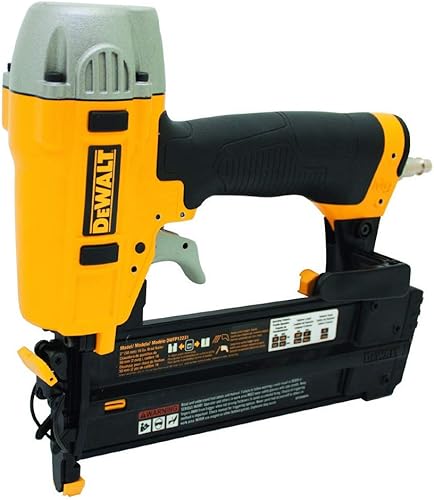
Brad nailers shine on lightweight applications where the fastener is supplementing glue or where the workpiece is too thin to accept a thicker nail without splitting. Thin shoe molding, small cabinet face frames, light chair rail, bead board panels, narrow craft strips, and any trim under about 3/8 inch thick all sit squarely in brad nailer territory. The near-invisible hole means you can skip wood filler on natural-finish wood in many situations, or keep touch-up work to a minimum on painted surfaces. The DEWALT DWFP12231, an air-powered nailer priced at $107.99 with a 4.7-star rating across 5,003 verified reviews, weighs just 2.65 pounds and measures 13 x 3.7 x 12 inches, which illustrates how light and compact these pneumatic brad tools tend to be. That low weight reduces hand fatigue during repetitive overhead work like installing ceiling trim or attaching cabinet backs. If your project involves primarily decorative detail work, a brad nailer will get the job done with less surface disturbance.
When to Use a Finish Nailer
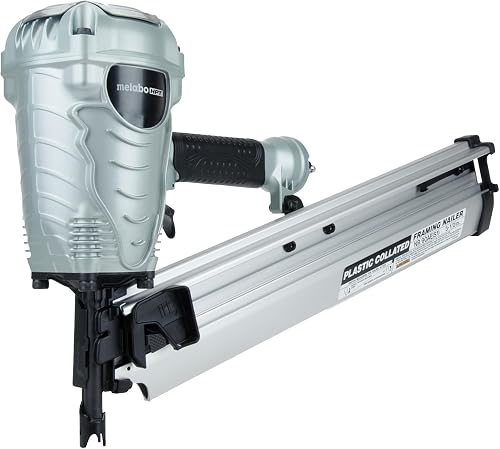
Finish nailers handle jobs where the trim carries real mechanical load or where the fastener must hold a heavier piece firmly against the wall or substrate. Thick baseboards at 3/4 inch and above, door and window casings, stair skirt boards, and heavy crown molding on high ceilings all benefit from the extra shank diameter a finish nailer delivers. The Metabo NR90AES1, an air-powered finish nailer priced at $169.00 and rated 4.7 stars across 2,445 reviews, weighs 7.5 pounds with dimensions of 15 x 9 x 9 inches, and owners purchased it around 800 times last month based on verified sales data. That weight is notably heavier than a comparable brad nailer, which reflects the larger magazine and more robust driving mechanism required to push thicker nails. When baseboard meets door casing and both need to stay firmly anchored through years of use, the stronger shear resistance of a 15 or 16-gauge finish nail makes a real difference. Finish nailers also remain the standard choice on job sites where carpenters need to set nails slightly below the surface with a consistent depth stop for clean putty work.
Power Source: Pneumatic vs Cordless
Both brad and finish nailers come in pneumatic and cordless battery-powered versions, and the power source can matter as much as the gauge choice depending on your workflow. Pneumatic models require an air compressor and hose, which adds setup time but delivers consistent drive force across an entire workday without worrying about battery state. These tools tend to be lighter than their battery-powered equivalents and cost less up front. Cordless models eliminate the hose and are faster to deploy in tight spaces, on ladders, or in rooms far from a compressor. The Metabo NT1850DG is a battery-powered nailer running on an 18-volt platform, weighing 5.5 pounds with dimensions of 11 x 3.5 x 10 inches, listed at $129.00 with a 4.8-star rating from 837 reviews and purchased by approximately 1,000 buyers last month, which points to strong current demand. Cordless models like this add battery weight and cost more than pneumatic equivalents, but for contractors moving room to room all day the freedom from a hose is often worth the premium. For a homeowner who only nails trim a few times per year, a compact pneumatic tool paired with a small pancake compressor can be a more economical starting point.
Nail Length, Material Compatibility, and Depth Settings
Choosing the right fastener length matters as much as choosing the right nailer type. For both brad and finish nailers, you generally want the nail to penetrate the substrate at least one inch beyond the back face of the trim piece. Thin drywall-backed molding can get away with shorter nails, but attaching thick baseboard to a framed wall means driving into a stud for real holding power. Material hardness also plays a significant role. Hard maple, oak, and other dense hardwoods demand a nailer with enough adjustable drive force to seat the nail flush without the shank deflecting sideways or blowing through the surface. Pneumatic tools with a tool-free depth adjustment wheel give you the most control and let you dial in the setting on a scrap piece before touching your finish surface. Cordless nailers increasingly offer sequential and bump-fire modes; sequential mode is slower but gives more precise placement, which is important when you are setting nails along a pencil line on delicate molding. MDF and particleboard require lower drive settings than solid lumber because the material crushes around the fastener if you overdrive.
Budget, Brand Options, and Making the Final Decision
If you only buy one nailer for home improvement projects, a brad nailer covers the widest range of light trim and cabinetry work with the least visible surface damage. Many DIYers start with a brad nailer and add a finish nailer once the limitations become apparent on heavier baseboard jobs. Contractors installing doors and baseboard every day routinely keep both in the van. Among the most reviewed options in this category, the DEWALT DCN680D1 carries a 4.8-star rating across 3,400 reviews at $399.00, reflecting the premium that professional-grade cordless finish nailers command. For budget-conscious buyers, the BOSTITCH BTFP12233 at $98.95 with a 4.8-star rating across 2,616 reviews shows that a capable pneumatic nailer does not have to break the budget. When forced to choose one tool, a 16-gauge finish nailer is modestly more versatile than an 18-gauge brad nailer because it can handle both fine trim and heavier stock with the right nail length selected. Whichever you choose, verify that replacement nail strips or coils in the correct gauge and collation angle are easy to source in your area before committing to a less common brand or format.
Common mistakes to avoid
- Using a brad nailer on thick baseboards and finding the nails loosen or pop within months because the 18-gauge shank lacks the shear strength for heavy trim attached to studs.
- Driving a finish nailer into thin shoe molding and splitting the piece because the 15-gauge shank diameter is too wide for material under 3/8 inch thick.
- Skipping a calibration test on scrap wood before hitting the finish surface, which leads to sunken holes that are difficult to fill cleanly without the wood swelling around the filler.
- Buying a pneumatic nailer without checking the compressor's CFM output against the tool's minimum requirement, then finding the nailer stutters or misfires mid-job.
- Purchasing the wrong nail strip format or collation angle for the magazine style of the nailer, then discovering the nails do not feed properly after the box is open.
- Assuming a cordless nailer on a low battery will drive nails to the same depth as a fresh charge, leading to inconsistently proud nails on the last pass that need to be set by hand.
Frequently asked questions
Can I use a finish nailer for everything a brad nailer does?
Not ideally. A finish nailer leaves a larger hole than a brad nailer, so on thin or delicate trim the bigger shank can split the wood and the hole requires noticeably more filler. A finish nailer also tends to be heavier and bulkier, making it less comfortable for detail work. For most heavy trim a finish nailer is the better tool, but for light molding and small cabinet work a brad nailer causes less surface damage.
Do pneumatic nailers come with a compressor included?
No. Pneumatic nailers require a separate air compressor that is sold independently. Before buying a pneumatic nailer, check the tool's minimum CFM requirement and match it to a compressor that meets or exceeds that output. A small pancake compressor handles most finish and brad nailer applications for residential trim work.
Are cordless nailers as powerful as pneumatic ones?
For standard trim applications into lumber and MDF, cordless nailers drive nails cleanly and consistently. Pneumatic tools have a modest edge in very dense hardwoods and in high-volume production use where maintaining consistent drive force across thousands of nails per day matters. For most DIY and light commercial trim work the difference is not significant.
What nail gauge does a finish nailer use compared to a brad nailer?
Finish nailers most commonly accept 15-gauge or 16-gauge nails. Brad nailers use 18-gauge nails. The lower the gauge number, the thicker the nail shank and the greater the holding power, but also the larger the hole left in the surface of the trim.
How should I fill nail holes after nailing trim?
For painted trim, use a paintable latex wood filler, let it dry fully, sand flush, then prime and paint. Brad nailer holes are small enough that experienced painters sometimes skip filler on quick paint-grade jobs. Finish nailer holes are larger and almost always need filling before a clean painted finish. For stained natural wood, use a color-matched putty stick after the topcoat so the filler blends with the final tone.
Which nailer should a first-time buyer get?
For general home trim work, start with an 18-gauge brad nailer. It handles the majority of light molding, cabinet, and craft projects, leaves small holes, and is typically the lighter and less expensive of the two types. Add a finish nailer when you start tackling heavy baseboards or exterior door casings where the extra holding power of a thicker nail becomes necessary.