Hammer Drill vs Rotary Hammer: Which Tool Do You Need?
Recommended picks


How the Hammering Mechanism Differs
The two tools attack masonry using completely different physics, and that difference determines everything else. A hammer drill adds a rapid axial pecking motion on top of a standard spinning chuck. A pair of serrated clutch plates ratchet against each other thousands of times per minute to produce the impact, which means the force scales with how hard you lean into the tool. This works acceptably on brick, cinder block, and soft stone, but the impact energy per blow is modest. A rotary hammer uses an electropneumatic piston system: a motor drives a ram that compresses a pocket of air, which in turn drives a striker into the end of the bit. This air-spring design delivers far more impact energy per blow, operates independently of operator pressure, and is the reason rotary hammers can punch through reinforced concrete while a hammer drill labors and overheats in the same material. The distinction is not just about power; it is about efficiency and bit life over the course of a full work day.
Chuck System: Keyless vs SDS
Chuck design is one of the sharpest practical differences between these tools. Most hammer drills ship with a standard keyless chuck, the same fitting used for twist bits, hole saws, and screwdriving accessories, which is a genuine advantage if the tool doubles as your everyday driver. Rotary hammers use SDS-Plus on most mid-size models or SDS-Max on heavy professional machines. SDS bits lock into the chuck with a twist-and-push bayonet action, have flats ground into the shank that transmit rotary force, and float slightly so piston impact travels efficiently to the tip rather than being absorbed by the chuck jaws. SDS bits cannot be dropped into a standard keyless chuck, and standard round-shank bits used in a rotary hammer without an adapter lose most of the impact energy in the process. If you plan to drill large-diameter holes or use chisel bits for tile removal, the SDS system is a necessity, not an option.
When a Hammer Drill Is the Right Tool
Hammer drills cover the majority of DIY masonry tasks comfortably. Setting concrete anchors for a deck ledger, drilling 1/4-inch to 1/2-inch holes through brick veneer for exterior lights, and mounting a TV bracket into a block wall are all well within the capability of a quality battery-powered hammer drill. The DEWALT DCH133B, a battery-powered tool drawing 4 amps on a 20-volt platform and spinning at 1500 RPM, weighs only 5 pounds and handles these tasks without the bulk or cost of a full rotary hammer. Based on verified owner reviews across more than 2,000 ratings, owners report clean, accurate holes in brick and light concrete with minimal effort. At $229, it sits in a practical price range for a tradesperson who wants one tool that handles both driving and occasional masonry work. For a homeowner who sets anchors a few times per year, the hammer mode built into most 20-volt cordless drill drivers is often enough, making a separate purchase unnecessary.
When a Rotary Hammer Is the Right Tool
Once the work shifts to dense concrete, core drilling, demolition chiseling, or holes larger than 3/4 inch, the electropneumatic piston mechanism of a rotary hammer pays for itself in time and bit life. The Milwaukee 2997-22, a battery-powered kit running at 2000 RPM and listing at $429, is built for sustained heavy-duty work of this type. Its 14.9-pound listed weight reflects the robust motor and piston assembly required for consistent penetration into reinforced slabs. Rotary hammers also include a chisel-only mode where rotation is turned off and the piston drives flat or pointed chisel bits, which is used for tile busting, mortar removal, and surface preparation. No hammer drill offers a true chisel mode. If you are a concrete or masonry contractor, or a serious renovator dealing with structural concrete several times per week, a dedicated rotary hammer is the correct investment, and the time savings per hole compared to a hammer drill in hard material is significant.
Power Source: Corded vs Cordless in Each Category
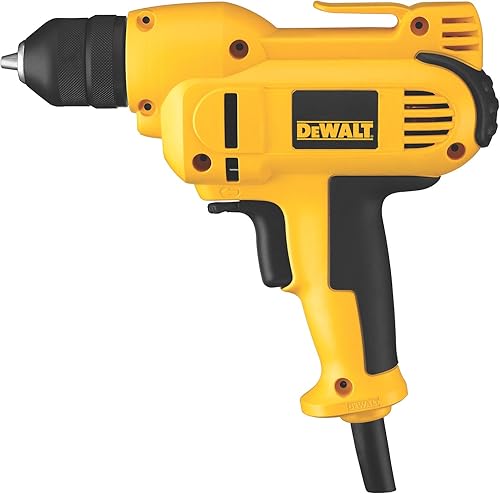
Both tool types come in corded and cordless versions, and the power-source choice matters differently depending on the application. Corded models deliver consistent output regardless of battery state, which matters during extended drilling sessions in hard material. The DEWALT DWD115K, a corded electric tool drawing 8 amps at 120 volts and spinning at 2500 RPM, is priced at $98.65 and has earned 1,857 ratings with around 400 units sold per month, based on available demand data. That consistent current draw means no performance fade mid-hole the way a battery can fade as it depletes. Cordless hammer drills and rotary hammers powered by 20-volt or 18-volt platforms offer the convenience of a shared battery ecosystem across an entire tool collection, which is a real-world advantage for tradespeople carrying multiple tools. The DEWALT DCH133B running at 4 amps on a 20-volt battery keeps its listed weight to 5 pounds, making overhead and tight-space work far less fatiguing than a corded model with a cord in the way. For fixed job-site work in one location, corded wins on sustained power. For mobility across a multi-room renovation, cordless wins on practicality.
Making the Final Decision
The shortest decision rule: if you already own a cordless drill driver and occasionally need to set anchors or drill through brick a few times per year, use the hammer mode your drill already has or buy a dedicated hammer drill in the $100 to $230 range. If you are drilling more than a few holes per week through concrete, need to core large holes, or require chisel capability for demolition work, buy a dedicated rotary hammer and budget at least $150 to $350 for a quality SDS-Plus model. Most DIYers and light renovation crews find a quality hammer drill covers 90 percent of their masonry needs at a fraction of the weight and cost of a rotary hammer. Professionals working in concrete daily will find the rotary hammer's electropneumatic mechanism more efficient and less fatiguing over a full work day. Battery platform compatibility is one of the strongest buying signals in both categories, based on demand and review data: buyers who already own tools on a given platform strongly prefer staying within it rather than switching brands for a single tool.
Common mistakes to avoid
- Using a standard drill in regular rotation-only mode to drill into masonry, which overheats the motor and dulls bits within minutes of contact with concrete or brick
- Buying a full rotary hammer for occasional light masonry work when a hammer drill or the built-in hammer mode on an existing 20-volt driver would be sufficient and far lighter
- Assuming any SDS bit fits any rotary hammer without confirming whether the tool uses SDS-Plus or SDS-Max, since the shanks are different sizes and not interchangeable between chuck types
- Drilling at full speed into hard concrete without letting the tool's hammering mechanism do the work, which increases friction heat, reduces bit life, and can crack the carbide tip
- Skipping a depth stop or depth mark when drilling anchor holes, leading to holes that are too shallow for the fastener's rated pull-out strength in the substrate
- Overlooking the chisel-only mode on a rotary hammer, which allows flat-chisel tile and mortar removal without needing a separate demolition tool or renting a breaker
Frequently asked questions
Can a hammer drill replace a rotary hammer for drilling into concrete?
For holes up to about 1/2 inch in diameter in standard concrete, a quality hammer drill will work, though more slowly and with more operator effort than a rotary hammer. For holes larger than 3/4 inch, dense reinforced concrete, or any chiseling work, a rotary hammer is the correct tool. Using a hammer drill in hard concrete for extended periods risks overheating the clutch mechanism and shortening the tool's service life.
Do rotary hammers require special SDS bits?
Yes. Rotary hammers use SDS-Plus or SDS-Max shanks that float slightly in the chuck so the piston's impact energy transfers directly to the bit rather than being absorbed by the jaws. Standard round-shank bits designed for keyless chucks cannot be used effectively in a rotary hammer without a reducing adapter, and using an adapter significantly reduces the impact efficiency that makes rotary hammers worth owning.
How much heavier is a rotary hammer than a hammer drill?
Based on the listed specs of products in this category, compact battery hammer drills can weigh as little as 5 pounds, while full-size rotary hammer kits can reach 14.9 pounds or more. That weight difference is meaningful when drilling overhead or in confined spaces. For workers who drill masonry all day, the ergonomic penalty of carrying a heavier tool is a real factor in choosing between the two.
Can I use my cordless drill's hammer mode for setting wedge anchors?
Yes, for standard wedge and sleeve anchors in concrete up to about 1/2-inch diameter, a battery drill with a hammer mode handles the task. The DEWALT DCH133B running at 4 amps and 1500 RPM on a 20-volt battery is a practical example of a compact tool that owners report using successfully for anchor installation. Larger anchors or anchor plates in hard concrete benefit from the higher impact energy of a dedicated rotary hammer.
Is a corded or cordless tool better for continuous masonry work?
Corded models deliver consistent output across long sessions since there is no battery depletion to manage. The DEWALT DWD115K draws 8 amps at 120 volts and runs at 2500 RPM without any performance fade, which is practical for a fixed-location job like drilling a full wall of anchor points. Cordless models offer freedom of movement and battery-platform compatibility with other tools, making them the better choice when mobility across a job site matters more than peak sustained power.