How to Choose a Cordless Drill in 2026
Recommended picks


Voltage and Power: 12V vs 20V
For most homeowners and DIYers, the 20-volt platform hits the best balance of power and runtime. The DEWALT DCD777D1 runs at 20 volts with a 2-amp battery and tops out at 1500 RPM; based on specs and verified owner reviews, it handles wood, drywall, and metal in everyday home use without the bulk of a pro-grade tool. Its 5.1-pound weight is manageable for extended overhead work, and its demand signal of 4,000 units bought last month across 2,200 verified reviews confirms it as the category's most popular option. Compact 12-volt drills are a different story: the DEWALT DCD701F2 weighs only 1.9 pounds and reaches 1500 RPM on a 12-volt, 2-amp pack, making it the preferred choice for electricians, cabinetmakers, and anyone working in tight spots. The Milwaukee 2505-22 also runs 12 volts at 1600 RPM and comes in at 2 pounds for a similarly compact footprint. The trade-off is a smaller battery capacity and less torque reserve compared to a 20-volt tool, so if your work regularly involves large-diameter bits or long fasteners in dense material, step up to 20 volts.
RPM and Speed: What the Numbers Actually Mean
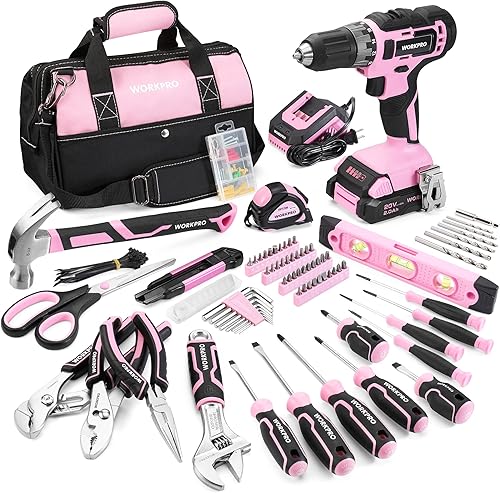
RPM determines how fast the chuck spins, which matters most for the material being drilled. Higher RPM clears material faster in softwood; lower RPM paired with more torque handles metal fastening or masonry without stripping. The Milwaukee 2997-22 lists 2000 RPM, making it one of the faster battery-powered options in this data set and well suited to production drilling in framing lumber. The Bosch GSR12V-300FCB22 reaches 1750 RPM at 12 volts, which is strong for its compact class and a key reason owners report it excels at cabinetry and trim work. Most 20-volt drills in this group, including the DEWALT DCD777D1 and the DEWALT DCH133B, sit at 1500 RPM. The WORKPRO W009152 lists 1300 RPM at 20 volts, which is sufficient for general fastening but slower for larger-diameter boring in hardwood. When comparing specs, look for a two-speed gearbox or variable-speed trigger so you can start holes at low RPM to prevent bit walk, then ramp up once the tip is seated.
Weight and Balance: Compact vs Full-Size
Weight directly affects fatigue on long jobs and maneuverability in confined spaces. The Milwaukee 2407-20 lists just 16 ounces, making it one of the lightest battery-powered drills in this group. Its listed amperage of 6.5 amps suggests a capable motor relative to that ultralight weight, which is why owners working in junction boxes and wall cavities favor it at its $86.0 price point. On the heavy end, the Milwaukee 2997-22 comes in at 14.9 pounds; that figure most likely reflects the full kit with two batteries and a charger, but even the bare tool is substantial at this power level. The DEWALT DCD777D1 at 5.1 pounds is a comfortable middle ground for most users across household tasks. If you work overhead or in confined spaces regularly, staying at 2 pounds or under (the DEWALT DCD701F2 at 1.9 lbs or the Milwaukee 2505-22 at 2 lbs) is a real comfort advantage over a full-size 20-volt tool on a full shift.
Battery Amperage and Runtime
Amperage on the battery pack determines how long the drill runs between charges, not how powerful the motor is. The DEWALT DCD777D1 ships with a 2-amp-hour pack at 20 volts, which covers moderate daily household use comfortably. The DEWALT DCH133B steps up to a 4-amp pack at 20 volts and lists at $229.0; owners who describe extended job-site use consistently note the higher-capacity pack reduces the time spent swapping or waiting for a charge. The Bosch GSR12V-300FCB22 uses a 12-volt, 2-amp pack at $139.0. Most major brands now ship slide-pack systems that are interchangeable across their tool lines, so if you already own a 20-volt DEWALT impact driver, circular saw, or other cordless tool, a DEWALT 20-volt drill plugs into the same battery ecosystem with no additional charger purchase. That ecosystem value is a real financial factor when comparing a $99 drill that adds to a platform you own versus a $99 drill from a brand you do not.
Price Tiers: What You Get at Each Level
The $86 to $100 range covers capable daily-use drills with strong demand signals. The Milwaukee 2407-20 lists at $86.0 with a 4.8-star rating across 1,732 reviews. The DEWALT DCD777D1 lists at $99.0 with a 4.8-star rating across 2,200 reviews and 4,000 units bought last month. The WORKPRO W009152 lists at $99.74 with a 4.8-star rating across 1,432 reviews and 600 bought last month. All three show strong real-world demand. The $120 to $175 range adds compact-pro specs: the DEWALT DCD701F2 at $124.13 for 12-volt buyers needing a sub-2-pound tool, and the Milwaukee 2505-22 at $172.0 as a 12-volt kit. Above $200, you move into higher-amperage configurations and contractor-grade kits. The DEWALT DCH133B lists at $229.0 with a 4-amp pack for extended runtime. The Milwaukee 2997-22 at $429.0 and the 2712-20 at $349.0 are multi-battery contractor purchases. For most first-time buyers, the $99 tier from a name brand with 2,000-plus verified reviews is the practical entry point; you can always add a higher-capacity battery later as your workload grows.
Choosing a Battery Ecosystem Before You Buy
One of the most consequential decisions has little to do with a single drill's specs: it is which battery platform you commit to. DEWALT's 20-volt MAX platform, shared across the DCD777D1, the DCH133B, and dozens of other tools, is the most widely stocked at major hardware retailers nationwide and shows the deepest catalog in this data set. Milwaukee's M12 platform (covering the 2505-22 at $172.0 and the 2407-20 at $86.0) is popular in the trades for compact tool applications. Milwaukee's M18 platform drives heavier-duty gear like the 2997-22 at $429.0. Bosch's 12-volt system, represented here by the GSR12V-300FCB22 at $139.0, is favored in shops that run other Bosch 12-volt tools. Committing to a platform before your first cordless drill purchase means future tools, batteries, and chargers are interchangeable, which saves money and simplifies job-site organization. Check what batteries you already own before choosing a new drill, especially if you are in the $99 to $140 range where the included pack is often a basic 2-amp unit.
Common mistakes to avoid
- Buying a bare-tool drill without checking whether you already own a compatible battery pack from the same brand and voltage class.
- Choosing a 12-volt drill for demanding applications, then discovering it lacks the torque reserve needed for large-diameter bits or long lag screws in dense material.
- Ignoring weight when the primary work is overhead or in tight spaces, where even 3 extra pounds compounds fatigue across a long job.
- Assuming higher RPM always equals more power. Torque at low RPM matters for metal fastening and masonry; RPM alone does not capture that.
- Skipping the battery amperage spec and then finding that the included 2-amp pack runs out quickly on extended tasks, forcing frequent charging breaks.
- Over-buying a $350 to $430 contractor kit when a $99 20-volt drill from a verified brand handles the vast majority of homeowner and light-trade tasks.
Frequently asked questions
Is a 20-volt cordless drill enough for deck framing and outdoor construction?
A 20-volt drill driver handles fastening and pilot-hole work on deck builds, but for sustained heavy driving you may want to pair it with a dedicated 20-volt impact driver. The DEWALT DCD777D1 at 20 volts and 1500 RPM covers light to medium framing tasks based on its specs, while the DEWALT DCH133B at 20 volts with a 4-amp pack provides more runtime for extended outdoor sessions.
What does the 'bought last month' figure tell me when comparing drills?
It reflects real-world purchase volume at the time the listing was captured, not a curated ranking. The DEWALT DCD777D1 shows 4,000 units bought last month; the Bosch GSR12V-300FCB22 shows 1,000. Both figures indicate active demand and suggest replacement parts and compatible accessories are more likely to remain available.
Can I share batteries between a 20-volt DEWALT drill and other 20-volt DEWALT tools?
Yes, DEWALT's 20-volt MAX battery platform is shared across the brand's cordless lineup. A battery from a DEWALT DCD777D1 kit works in DEWALT circular saws, impact drivers, and other 20-volt tools from the same platform. Always confirm the battery voltage matches the tool's listed requirement before inserting a pack.
What is the practical difference between 1500 RPM and 2000 RPM in a cordless drill?
At 2000 RPM (as listed on the Milwaukee 2997-22), the bit spins faster per trigger pull, which removes material more quickly in wood and speeds up repetitive drilling tasks. At 1500 RPM (DEWALT DCD777D1, DEWALT DCH133B, and others), the drill runs at a pace suited for general fastening and moderate drilling without sacrificing control. For most household use, 1500 RPM is fully sufficient.
Is a 12-volt drill like the DEWALT DCD701F2 worth it over a lighter 20-volt option?
The DEWALT DCD701F2 lists at 1.9 pounds on a 12-volt, 2-amp pack and tops out at 1500 RPM at $124.13. Its primary advantage is weight and size in confined spaces, not raw power. If you work inside wall cavities, under cabinets, or in electrical panels regularly, the 1.9-pound weight is a meaningful ergonomic advantage over a 5-pound 20-volt tool. For general use, the DEWALT DCD777D1 at $99.0 delivers more torque reserve at a lower price.
How do I find the right cordless drill for more detailed questions?
ToolGalaxy ranks cordless drills by verified demand, rating, and published specs. For specific questions about a model or fit for a particular job, reach out at hello@toolgalaxy.com.